The kitchen is more than just a place for cooking; it’s often the heart of the home where families gather, friends socialize, and cherished memories are created. Choosing the right color for your kitchen walls can significantly influence the ambiance, thereby affecting productivity, mood, and even the taste of the meals prepared there. A harmonious color palette not only enhances the visual appeal of the kitchen but can also inspire culinary creativity.
When considering kitchen color inspirations, think about the mood you wish to evoke and the style that aligns with the rest of your home. From classic whites to bold modern hues, the options are nearly endless. Below are some popular choices and the feelings they can convey:
- Classic Whites and Neutrals: Timeless and versatile, shades of white, beige, and gray can make the kitchen look clean, open, and bright. They provide a neutral backdrop that complements various cabinetry and countertop materials like wood, granite, or quartz.
- Vibrant Reds and Oranges: These energetic hues stimulate appetite and are perfect for those who love an invigorating start to their day. While intense, such colors are best used as accents, perhaps on an accent wall or in invigorating kitchen accessories.
- Earthy Greens: Ideal for bringing a touch of nature indoors, green provides a sense of tranquility and sustainability, especially when paired with wooden elements and plant-based decor.
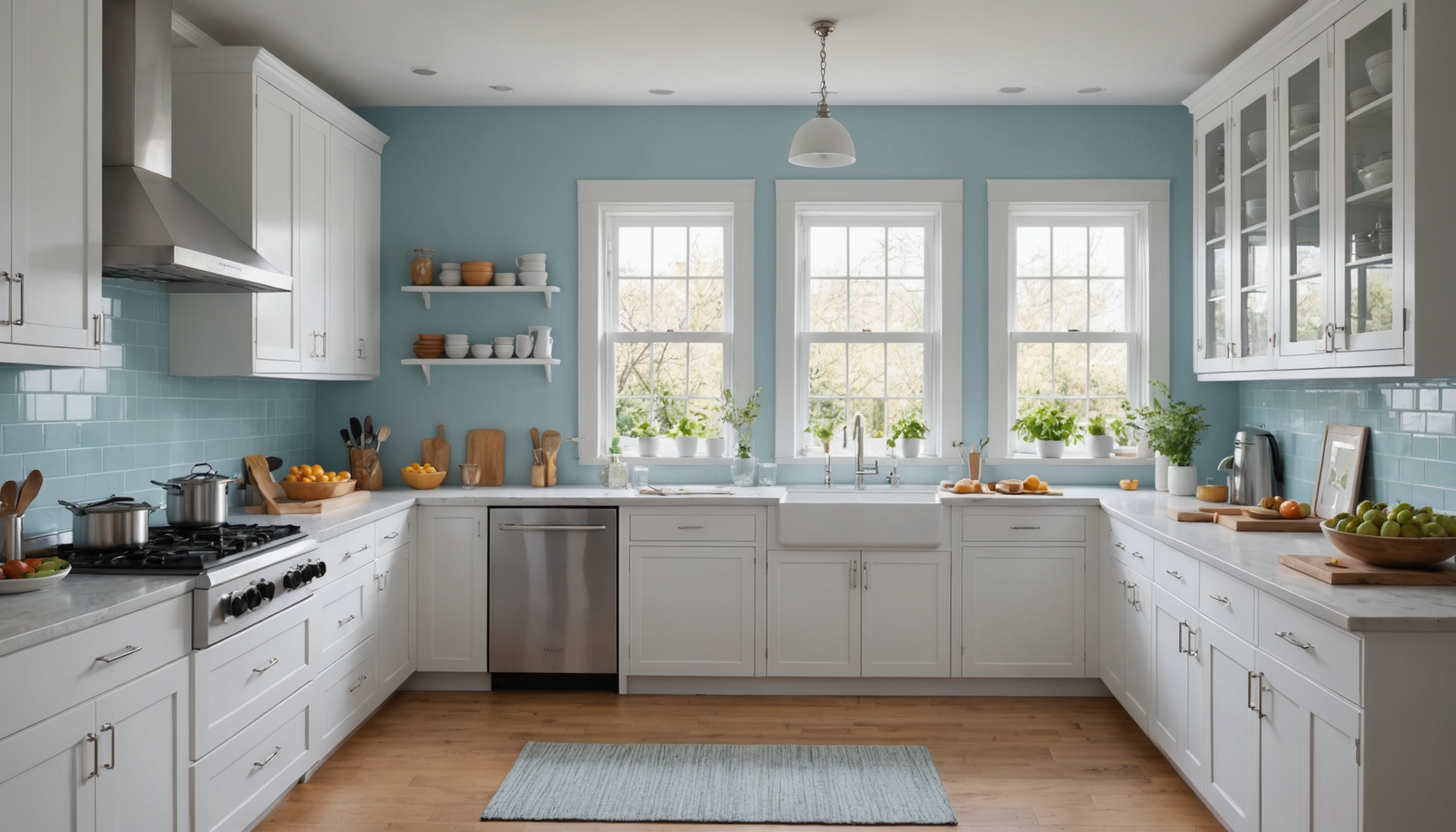
- Soft Blues: Invoking a sense of calm and cleanliness, pastel blues are excellent for kitchens with ample natural light. They pair well with white cabinetry and stainless-steel appliances, creating a fresh, inviting atmosphere.
- Deep Blues and Navy: Rich and sophisticated, these shades can turn a kitchen into a regal culinary space. They work beautifully with gold or brass fixtures.
- Modern Blacks and Charcoals: For a sleek, contemporary look, consider deep charcoal or even black. When contrasted with stainless steel and crisp whites, these colors create a dramatic effect.
To make an informed decision, it can be helpful to compare how these colors align with or can enhance your kitchen’s existing decor and features. Below is a comparison of different color effects:
| Color | Effect | Best Paired With |
| White/Beige | Clean, open atmosphere | Wood, granite, or stainless steel |
| Red/Orange | Energetic, appetite-stimulating | Neutral countertops, bold decor |
| Green | Tranquil, natural | Wood elements, plant-based decor |
| Pastel Blue | Calm, inviting | White cabinetry, stainless steel |
| Navy | Rich, sophisticated | Gold or brass fixtures |
| Black/Charcoal | Sleek, modern | Stainless steel, crisp whites |
Ultimately, choosing the right kitchen color comes down to personal preference and the kind of vibe you want in the space. Whether you opt for calming neutrals or bold contrasts, ensure that the colors enhance both the aesthetic and functional aspects of your kitchen, making it a place of comfort and delight.
soothing shades for bedrooms
 Creating a restful environment in your bedroom is essential for ensuring quality rest and relaxation. With the right shades, your bedroom can become a serene retreat from the hustle and bustle of daily life. Here’s a step-by-step guide to selecting soothing colors that will enhance tranquility and help you unwind.
1. Understand the Basics of Color Psychology:
– Colors can influence emotions; thus, opting for cool colors like blues, greens, and soft neutrals can promote a sense of calm.
– Warmer colors tend to be more stimulating; if used, they should be in muted tones.
2. Identify Your Preferred Mood:
– Decide whether you want your bedroom to feel airy and spacious or cozy and intimate. This decision will guide your color choices.
3. Choose a Base Color:
– For a calm, airy feel, consider soft blues. Think of pale sky and seafoam for a soothing atmosphere.
– For a grounded and cozy environment, lean towards earth tones such as soft taupes or warm grays.
4. Complement with Harmonious Accent Colors:
– Select complementary colors for accents rather than the dominant hue.
– Use gentle greens or soft lavender for subtle accents that won’t overwhelm the base color.
5. Consider the Light:
– Observe the natural lighting in your bedroom at different times of the day. Light affects how colors appear and can determine whether a color feels too bright or muted.
– A room with ample natural light can handle cooler hues, while a dim-lit room may benefit from the warmth of neutral tones.
6. Experiment with Samples:
– Purchase small paint samples and apply them to different areas of your walls to see how they interact with the light and other elements in your bedroom.
– Examine these samples over several days. This allows you to see how the colors look at different times under various lighting conditions.
7. Incorporate Texture and Patterns:
– Even with a soothing palette, adding texture can enhance the sense of comfort. Consider textured rugs, plush throws, or patterned bed linens in complementary hues.
– Subtle patterns in wall coverings or bedding can add interest without disrupting the serene ambiance.
8. Choose Coordinating Furniture and Accessories:
– Opt for furniture pieces and accessories that complement your chosen color palette.
– Natural wood tones, white, or shades that match your wall color can help unify the space.
9. Add Personal Touches:
– Introduce personal elements that make the space truly your own. This could include framed artwork, plants, or decorative objects that adhere to your color scheme.
– Ensure these additions do not clash but instead enhance the calming environment you’ve designed.
10. Regularly Reassess Your Space:
– As your tastes evolve, you may want to adjust accents or incorporate new elements to maintain that sense of tranquility and personal satisfaction.
By considering each step and understanding how color interacts with the environment, you can create a bedroom sanctuary tailored to your relaxation needs. Remember, the ultimate goal is to design a space where you can rest, recharge, and wake up feeling refreshed.
bright ideas for living rooms
When it comes to selecting colors for the living room, the goal is to create a lively yet welcoming atmosphere, perfect for entertaining or unwinding after a long day. With some thoughtful choices, your living space can reflect your personal style while offering a cozy setting for conversation and relaxation.
Consider Light and Space: The amount of natural light your living room receives is a critical factor in choosing colors. Bright, sunny rooms can handle cooler shades like blues and greens, which create a crisp, refreshing environment. In contrast, rooms with limited natural light may benefit from warmer, lighter tones such as creams, beiges, and soft yellows to enhance warmth and make the space feel more inviting.
Bold Accents for Dynamic Depth: Adding a splash of bold color can energize the space and create points of visual interest. Consider incorporating accent walls in rich hues like deep teal or vibrant emerald to add character without overwhelming the entire room. These bold shades can be further complemented with smaller accents, such as throw pillows, artwork, or a statement rug, all in coordinating colors.
Neutral Foundations for Versatility: A neutral base offers endless flexibility and ensures your living room remains elegant and timeless. Shades of gray, taupe, or soft white serve as a perfect canvas, allowing you to easily switch out accent pieces to refresh the look with seasonal decor. Neutrals can also make a living room appear more spacious and serve as an ideal backdrop for any sophisticated or eclectic style.
Textures and Layers: Introducing various textures is a great way to add dimension and warmth to your living room without changing the color scheme. Consider textured wall finishes, like venetian plaster, or incorporate textures through furniture and accessories. Soft textiles such as chunky knit throws, velvet cushions, or woven baskets can provide depth and character to neutral settings, making the space feel layered and interesting.
Color Combinations for Harmony: Combining colors thoughtfully can elevate your living room from ordinary to extraordinary. For example, pairing cool colors with warm accents—like gray walls with coral or mustard accessories—creates a balanced visual that is both calming and inviting. Mixing and matching different shades within the same color family also helps in maintaining harmony while providing visual intrigue.
Personalized Touches for Unique Flair: Don’t shy away from integrating unique elements that reflect your personality. Whether it’s incorporating a vibrant piece of artwork, a collection of travel souvenirs, or an antique piece of furniture, personalized touches can blend seamlessly with your chosen color palette, adding a distinct flair to your living room.
By thoughtfully considering factors like lighting, color dynamics, and personal tastes, you can create a living room that is not only stylish and comfortable but also a true reflection of your identity, catering to your needs and those of your guests. Whether your taste leans towards modern chic or eclectic elegance, the right color strategy can make your living room the heart of the home.
cheerful hues for children’s rooms
When selecting paint colors for a child’s room, aiming for a space that sparks imagination and joy is essential. This room should be a vibrant haven that reflects both playfulness and creativity, encouraging a child’s activities and interests. To achieve this, consider colors that are lively and engaging, providing a backdrop that can grow with your child.
Warm colors, such as sunny yellows and cheerful pinks, can create an uplifting environment. Yellow, reminiscent of sunshine, is known for its ability to stimulate mental activity and cheerfulness. A soft pastel or a bolder, energizing yellow can inspire a sense of happiness. Pink, on the other hand, offers comfort and can generate a nurturing and soothing atmosphere, creating a balanced space for both rest and play.
Meanwhile, soft blues and greens tend to evoke calming and harmonious feelings. These shades can help children relax while providing a gentle contrast to more energetic elements in the room. Light blue can inspire tranquility, making it suitable for shared spaces where siblings need to unwind. Similarly, a soft green might bring a touch of nature indoors, offering a peaceful yet invigorating environment.
For a more dynamic approach, you can incorporate vibrant accents. Bold hues like bright red or electric purple can be used strategically for accent walls, furniture, or playful accessories to create pockets of stimulation without overwhelming the senses. These accents can serve as focal points that capture attention and encourage playfulness.
Incorporate patterns and murals for an added layer of visual interest. Think about stripes, polka dots, or even custom wall murals featuring dinosaurs, outer space, or favorite storybook characters. These can enhance the room’s personality and offer limitless potential for a child’s imagination.
The versatility of neutral tones should not be underestimated. Soft grays or muted whites provide a clean, adaptable base that allows for frequent updates and additions as tastes and trends evolve. Incorporating neutral tones can provide balance amid more colorful elements, ensuring the space feels cohesive and not overstimulating.
When testing colors, be sure to consider the room’s lighting as it can alter how a shade looks at different times of the day. Use paint samples to see how colors change from morning to night, ensuring they provide the desired effect in various lighting conditions.
Consider adding layers of texture through rugs, cushions, and curtains, selecting materials and patterns that complement the chosen color scheme. Textiles offer warmth and can contribute to the room’s overall aesthetic, enhancing the sensory experience of the space.
Finally, involve your child in the decision-making process by encouraging them to choose colors or themes that resonate with them. This involvement not only personalizes their space but also fosters a sense of ownership and pride in their room. The ultimate goal is to create a dynamic and inviting environment that supports both their imaginative play and restful sleep.
tranquil tones for bathrooms
Bathrooms, often viewed as sanctuaries within the home, benefit immensely from the right color palette. A tranquil atmosphere in this space can transform daily routines into calming rituals. Shades that evoke serenity and relaxation are key to fostering a spa-like environment.
To start, consider pale blues and aquas, reminiscent of tranquil waters, to encourage a sense of calm and cleanliness. These hues reflect light beautifully, which can make even the smallest bathrooms appear larger and more open. Pair these with crisp white trims or tiling for a clean, refreshing look.
For those preferring a warmer palette, soft earth tones such as muted taupes or sandy beiges can create a cozy, enveloping effect. These colors are excellent for grounding a space, making it feel both inviting and serene. Consider complementing these shades with natural materials like wooden or stone accents, enhancing the organic, spa-like feel.
Cool grays, especially those with blue or green undertones, offer another sophisticated option that maintains a tranquil vibe while bringing modern elegance to the space. These shades work well with metallic fixtures, providing a chic contrast that emphasizes a sleek design.
Lighting plays a crucial role in how these colors come to life. When choosing a palette, keep in mind the artificial lighting options available, as lighting can significantly influence the appearance and feel of a bathroom’s interior. Warm lights can soften cool tones, while cooler lights might enhance the crispness of earth tones.
Experiment with subtle accent colors to prevent the space from feeling too clinical. Soft pastels or muted lavenders can provide a gentle pop of color, adding a touch of personality without overwhelming the senses. These accents can be introduced through accessories such as towels, bath mats, or artwork, making them easy to update and refresh.
A thoughtfully chosen color scheme can be further enhanced with textures. Consider incorporating texture through bathroom textiles like plush towels or rugs, which not only add warmth but also reinforce the color palette. Fluted glass, bamboo accents, or natural stone can also contribute to a soft yet lively contrast against smoother surfaces.
Plants or greenery can add tranquility and a hint of nature, further enhancing the calming effect of the selected colors. Even a simple succulent or a small bouquet of fresh flowers can bring life and freshness to the decor.
Ultimately, the goal is to create a space that feels like a personal retreat—a place where you can escape the stresses of the day and indulge in a moment of peace and relaxation. By carefully selecting colors that promote a sense of calm, your bathroom can become an oasis of serenity and rejuvenation within your home.
In conclusion, the perfect paint color can dramatically transform any room, enhancing its function and mood. Whether you’re creating a lively kitchen, a serene bedroom, an inviting living room, a playful children’s space, or a tranquil bathroom, choosing the right shades can make all the difference. Embrace the power of color to reflect your personality and make each space a harmonious part of your home.