Maximizing storage solutions in your laundry room is all about making the most out of limited space, ensuring that every item has its designated place, and ultimately making the room more functional and organized. Whether you are dealing with a spacious area or a compact corner, strategically designed storage systems can significantly elevate your laundry room’s efficiency and appearance.
Begin by evaluating the available space and identifying any opportunities to optimize it. Utilizing vertical space is often the key to achieving effective storage solutions. Install sturdy shelving or cabinets above the washer and dryer units to keep essential supplies such as detergents, fabric softeners, and stain removers within easy reach. Consider adding adjustable shelves to accommodate items of varying heights, allowing for versatile storage options.
Another effective idea involves incorporating multifunctional furniture. A foldable table can serve as a surface for folding clothes and organizing laundry while also being easily stowed away when not in use. In tight spaces, wall-mounted drying racks or hooks can serve dual purposes by providing a space to air-dry delicate items or hang frequently used tools like lint rollers.
- Modular Storage Units: Investing in modular storage units allows you to customize and adapt the organization as your needs change. These units can include pull-out shelves, drawers, and baskets to further expand your storage capacity and improve accessibility.
- DIY Crate Shelves: For a cost-effective and customizable solution, consider using wooden crates as DIY shelving units. Painting or staining them can add a touch of decor while offering a rustic, yet practical, method of storing laundry essentials.
- Clear Containers: Using clear containers or labeled bins for small items like clothespins, dryer sheets, and sewing kits ensures that everything remains visible and accessible, reducing the time spent searching for specific items.
Every storage solution’s effectiveness can be amplified by integrating smart home technology, providing both convenience and security. Install energy-efficient smart lighting to ensure sufficient illumination, especially for sorting and folding tasks performed in the evening. Smart locks on cabinets storing hazardous materials ensure the security of children and pets, providing peace of mind, especially in homes with minimal surveillance.
In terms of selecting materials for your storage solutions, it’s crucial to balance durability and style. Consider the following table for a quick comparison of commonly used shelving materials:
| Material | Benefits | Drawbacks |
| Metal | Strong, durable, and capable of supporting heavy loads | Can be prone to rust if not properly treated |
| Wood | Versatile, aesthetically pleasing, and easily customizable | May require weatherproofing in moist environments |
| Plastic | Lightweight, resistant to moisture, and inexpensive | Less durable compared to metal and wood under heavy loads |
Ultimately, by selecting the right storage solutions and design elements that fit your needs, you can transform your laundry room from a cluttered space to a streamlined, organized, and efficient part of the home. These changes not only simplify your laundry routine but also contribute to a more cohesive household, where every area serves its purpose brilliantly.
Creating efficient workspaces
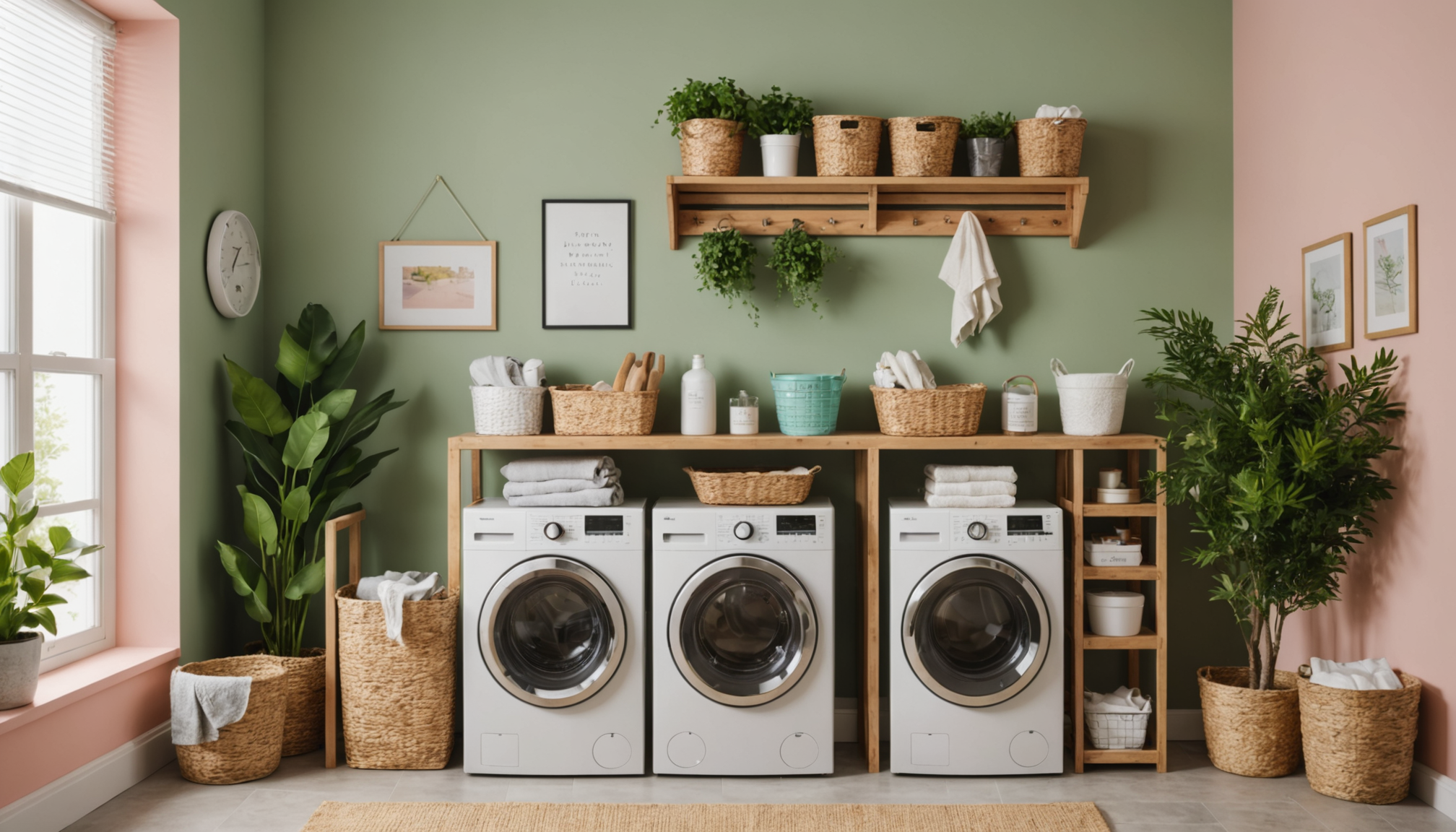 Creating an efficient workspace in your laundry room involves careful planning and organization to ensure that every task can be completed with ease and minimal disruption. To achieve this, consider the following steps that can transform your laundry room into a highly functional area:
1. Strategic Appliance Placement:
– Begin by arranging your washer and dryer in a way that provides easy access to both, minimizing the need for excessive movement between loads.
– If possible, position the appliances near water, power outlets, and ventilation to reduce the complexity of installation and operation.
2. Ergonomic Setup:
– Ensure that the height of your appliances and work surfaces is comfortable to reduce strain. Consider using pedestals to raise front-loading machines, allowing for less bending.
– Install pull-out shelves or retractable platforms under top-loading machines to aid in loading and unloading.
3. Dedicated Folding Space:
– Allocate a flat, waist-level surface specifically for folding clothes. This can be a built-in countertop or a sturdy fold-down table that can be tucked away when not in use.
4. Ironing Station:
– Set up a small, easily accessible area for ironing. Store the iron and ironing board nearby, perhaps in a wall-mounted cabinet to keep the floor clear.
5. Efficient Sorting Area:
– Use bins or hampers to separate laundry by color, fabric type, or owner. Consider easy-to-move options on wheels for flexibility.
6. Utilizing Vertical Space:
– Install wall-mounted racks or pegboards to hang frequently used items like lint rollers, clothespins, and scissors, keeping them off surfaces and easy to find.
– Suspend a ceiling-mounted drying rack or retractable clothesline for air-drying items, saving horizontal space.
7. Lighting Improvements:
– Incorporate bright, energy-efficient lighting, such as LED fixtures, to provide ample light for tasks such as spot-cleaning and sorting.
– Install under-cabinet lighting for specific areas that require extra illumination, aiding in visibility without additional power consumption.
8. Incorporating Smart Technology:
– Consider smart home devices for better organization and efficiency. Smart washers and dryers can be programmed for specific cycles, and smart lighting solutions can be adjusted for optimal brightness based on task needs.
9. DIY Enhancements:
– Explore DIY projects to create compact, custom solutions tailored to your space. For instance, create collapsible laundry hampers using fabric and wooden frames, or make a laundry caddy using old wooden crates to design personalized storage.
By systematically organizing your laundry room with these steps, you can create an efficient and pleasant working environment. Adopting innovative design elements and incorporating technology will not only streamline your laundry tasks but also enhance the overall aesthetic and functionality of the space.
Sorting and labeling systems
Establishing a sorting and labeling system in your laundry room is key to maintaining order and efficiency, significantly minimizing the time and effort spent on your laundry tasks. A well-organized sorting strategy can transform chaos into productivity, making the process not only quicker but also more enjoyable.
To begin, consider implementing a color-coded basket system which allows each member of the household to have their designated basket. This helps not only in laundry distribution but subtly encourages personal responsibility for one’s laundry. Utilize washable color-coded labels or tags to denote the intended owner or the type of garments to be washed together, such as whites, colors, delicates, or heavy-duty items. This visual system streamlines the task, ensuring that each load is correctly sorted from the start.
Labeling is not only about baskets but extends to storage solutions as well. Clearly marking shelves or bins with their contents helps maintain an organized space where every item, from stain removers to dryer sheets, is easily accessible and visibly accounted for. Use chalkboard labels or DIY chalk paint surfaces which offer versatility for frequently rotating supplies, providing a sustainable and adaptable system that evolves with your needs.
Furthermore, incorporating smart home technology can elevate the efficacy of your sorting system. For instance, install smart tags on laundry baskets that communicate with smartphones or smart home hubs. These tags can provide reminders or notifications when certain baskets are full or specific laundry items require attention, thereby enhancing the efficiency of your laundry routine.
For a highly customizable approach, consider modular sorting units that can be rearranged or expanded as the family grows or habits change. These units can integrate rolling hampers, making it easy to ferry clothes from bedroom to laundry room without hassle. Additionally, a small sorting table or counter adjacent to your washing machine can be a game-changer, providing a dedicated space for pre-treatment and organization right before the wash cycle begins.
Remember, the goal is to create an intuitive and stress-free environment where sorting and labeling become second nature, rather than a chore. By focusing on accessibility, visibility, and user-friendliness, your laundry room can transition from a dreaded corner to a well-oiled component of your household. Investing time in a detailed sorting and labeling system now will save countless hours in the future, allowing for a more leisurely and efficient laundry experience.
Maintenance and cleaning tips
Maintaining a clean and efficient laundry room is crucial for ensuring its longevity and functionality. Regular upkeep not only preserves the appearance of the space but also enhances the performance of your appliances, contributing to a smoother and more enjoyable laundry process. Start by establishing a consistent cleaning schedule tailored to your laundry room’s specific needs, keeping both high-use areas and hidden spots in top condition.
First, keep your appliances in peak condition by routinely inspecting and cleaning them. Begin with the washer, which, despite its reputation for cleanliness, can harbor detergent buildup and mold. Monthly, run an empty cycle with hot water and a cup of white vinegar or a specialized washing machine cleaner to eliminate odors and mold. Similarly, the dryer vent and lint trap require regular attention. Clear the lint trap after each use and do a deep clean of the dryer vent every few months to prevent fires and enhance drying efficiency.
For surfaces, make it a habit to wipe down countertops, shelves, and cabinets with a damp cloth regularly, removing dust and detergent spills. This step not only keeps the area tidy but also ensures that the workspace remains functional and clutter-free. Pay special attention to high-touch areas like door handles, light switches, and appliance buttons, which can harbor grime over time.
Incorporate smart home solutions to augment your cleaning routine, adding convenience and efficiency. For instance, smart water leak detectors beneath the washer can alert you to leaks, allowing you to address issues promptly, minimizing potential water damage. Similarly, consider installing smart plugs on your appliances so that they can be turned off remotely, adding an extra layer of security and energy conservation.
To maintain a pleasant atmosphere, don’t overlook the power of air circulation. Make sure your laundry room is well-ventilated to avoid dampness and encourage air flow. Installing an exhaust fan or simply keeping a window open, weather permitting, can help immensely. Additionally, use air purifiers or dehumidifiers to keep the room fresh and inhibit mold growth.
Finally, embrace DIY methods to tackle persistent stains and odors naturally. Create a homemade cleaning paste using baking soda and water for scrubbing stubborn stains, or employ a mixture of vinegar and essential oils as a natural deodorizer for the room. These eco-friendly cleaning solutions are not only gentle on surfaces but also safe for homes with children and pets.
Through diligent maintenance and creative cleaning strategies, you can ensure that your laundry room remains a well-organized and inviting space. By combining regular care with modern technology, you not only optimize your daily laundry tasks but also extend the life of your appliances and preserve the room’s aesthetic appeal.
Incorporating style and decor
Infusing style and décor into your laundry room breathes life into a space often viewed purely as functional, transforming it into an extension of your home’s aesthetic. With thoughtful additions and creative touches, your laundry room can reflect personal taste and provide a welcoming atmosphere, making laundry duties less of a chore and more of an enjoyable experience.
Start by considering a cohesive color scheme that harmonizes with the rest of your home, yet adds a unique flair to the laundry room. Soft, neutral tones like whites, grays, or beiges can create a calming backdrop, while pops of color—perhaps through decorative baskets or a vibrant accent wall—can introduce personality and charm. If your space allows, experiment with bold patterns or textured wallpapers to add visual interest.
Lighting plays a crucial role in setting the mood of a room. Beyond the essential task lighting, consider incorporating aesthetic fixtures that provide both style and warmth. Pendant lights, vintage sconces, or modern LED strips can offer ambient lighting while acting as focal points or conversation starters.
To further personalize the space, integrate art pieces or framed prints that align with your style. Whether it’s quirky laundry-themed art, serene landscapes, or family photos, wall décor can offer a homely touch that resonates with you. Additionally, using decorative hooks or coat racks can serve a dual purpose: attractive wall features that also provide functionality by holding items like umbrellas or reusable bags.
The flooring choice can dramatically influence the room’s overall look and feel. Consider using durable materials such as ceramic tiles that resemble natural stone or wooden floorboards. These not only offer longevity and are easy to clean but also elevate the room’s elegance. Rugs or mats in complementary designs can add softness underfoot and inject color or texture into the space.
Storage solutions can double as décor opportunities by highlighting your personal style. Open shelving dressed with neatly arranged jars or baskets adds an organized and inviting feel. Choose containers with appealing designs or finishes, such as glass jars for laundry powders or wicker baskets for clothespins, to blend storage with style seamlessly.
Incorporating plants or greenery can enhance air quality and impart freshness and vibrancy. Consider low-maintenance houseplants like succulents or ferns that thrive in humid environments. Stylish planters or hanging pots can provide eye-catching accents while supporting a healthy atmosphere.
Lastly, engage with the smart home trend by integrating technology into your design. Use attractive wall-mounted tablets or sleek smart home displays to control lighting, set laundry timers, or receive maintenance alerts, maintaining both style and modern convenience.
By merging form with function, your laundry room becomes more than a utility area—a beautifully articulated component of your home that mirrors your style and elevates everyday routines.
In conclusion, organizing and beautifying your laundry room blends practicality with personalization, ultimately transforming this utility space into a harmonious extension of your home. By maximizing storage, creating efficient workspaces, implementing thoughtful sorting systems, and incorporating style, you can enhance both its functionality and visual appeal. Through regular maintenance and the use of smart home technologies, your laundry room can remain a clean, efficient, and inviting space, making laundry day a more enjoyable experience for everyone.