When embarking on a driveway paving project, selecting the appropriate materials is crucial to achieving both aesthetic appeal and long-term durability. The choice of materials not only dictates the overall look of your driveway but also affects its performance, maintenance needs, and environmental impact. To make an informed decision, consider several critical factors, such as climate conditions, budget, and personal style preferences.
One of the most popular materials for driveway paving is concrete. Known for its durability and low maintenance, concrete provides a clean and modern look. It can withstand various weather conditions, making it suitable for both hot and cold climates. However, it can be prone to cracking over time due to temperature fluctuations or shifting ground.
Asphalt is another common choice, valued for its cost-effectiveness and quick installation. It offers a classic black finish and provides excellent traction. Although it requires periodic resealing to maintain its appearance and performance, asphalt is highly resistant to harsh weather and is well-suited for colder regions where it can easily expand and contract with temperature changes.
Paver stones offer a more decorative option, with a variety of colors, shapes, and patterns to choose from. They add a touch of elegance, creating a unique and inviting entrance to your home. Pavers are also praised for their durability and ease of repair; individual stones can be replaced if damaged, without affecting the entire driveway’s integrity. However, they come at a higher upfront cost and may require regular maintenance to prevent weed growth between the joints.
Gravel driveways are among the most cost-effective and environmentally friendly options. They offer excellent drainage, reducing the risk of flooding and water pooling. Gravel adapts well to diverse design styles, from country charm to rustic elegance. Despite their advantages, gravel driveways require more frequent upkeep, including raking and replenishing, to maintain their appearance and functionality.
The table below provides a quick comparison of these popular materials based on key characteristics:
| Material | Durability | Maintenance | Cost | Aesthetic Options |
| Concrete | High | Low | Medium | Limited |
| Asphalt | Medium | Moderate | Low | Basic |
| Paver Stones | High | Moderate | High | Extensive |
| Gravel | Low | High | Low | Varied |
Ultimately, the choice of materials will significantly impact the driveway’s overall performance and lifespan. By carefully considering the characteristics and trade-offs of each material, homeowners can choose a paving solution that meets their specific requirements and enhances their property’s value and appearance.
exploring decorative patterns
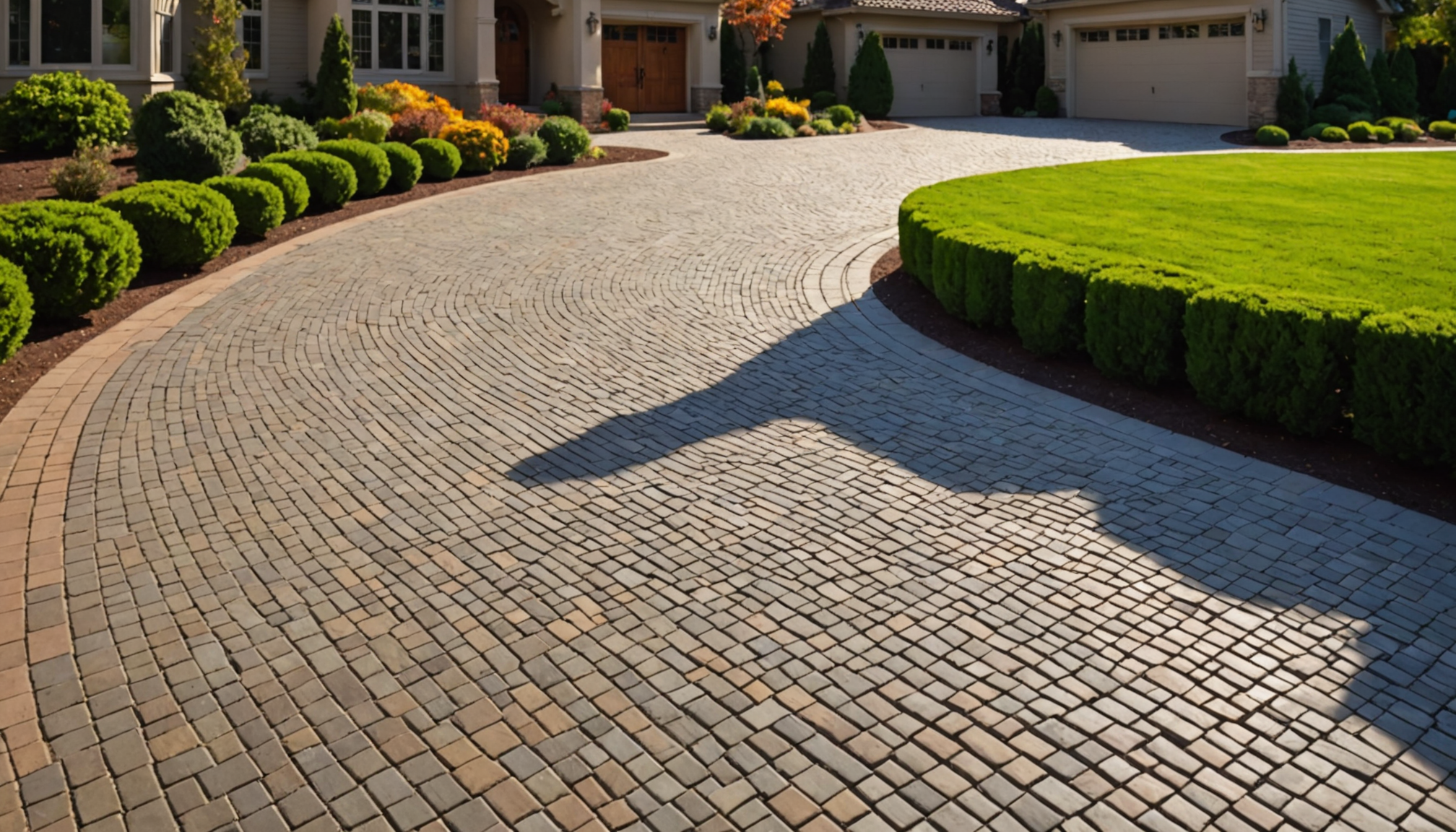 Driveway patterns can transform a functional space into a stunning visual statement. By experimenting with different decorative patterns, you can achieve a look that complements your home’s architecture and landscape. Here’s how to explore various paving patterns for your driveway:
1. Herringbone Pattern:
– Layout: The herringbone pattern involves laying bricks or pavers at a 45 or 90-degree angle to create a zigzag look.
– Advantages: This arrangement is not only visually appealing but also exceptionally strong and interlocks well, providing excellent durability and stability.
– Installation Steps:
1. Mark the driveway boundaries and excavate the site to an appropriate depth.
2. Apply a compacted gravel base followed by a layer of sand to ensure a flat laying surface.
3. Start laying the pavers from one corner, aligning them at the chosen angle, and continue this pattern across the entire driveway.
4. Use edge restraints to maintain the pattern and prevent spreading.
5. Fill the gaps with sand and compact the surface to lock the pavers in place.
2. Basket Weave Pattern:
– Layout: This pattern mimics woven baskets and is made by pairing two or more bricks in alternating directions to create a grid look.
– Benefits: It’s perfect for vintage or traditional homes and is relatively easy to install.
– Installation Steps:
1. Prepare the base by digging out the area and adding a gravel and sand layer.
2. Start at one end of the driveway, placing two pavers horizontally, then the next set vertically, continuing this sequence.
3. Adjust the layout to fit the area, ensuring that the pattern remains even throughout.
4. Add a border or edge restraints to hold the pavers in place.
5. Apply sand over the laid pavers and sweep it into the joints to ensure stability.
3. Circular Patterns:
– Layout: Circular designs create stunning focal points by radiating from a central spot outward.
– Practicality: They lend an artistic touch and are ideal for larger driveways or circular driveways.
– Installation Steps:
1. Establish a central point and use a string and garden stakes to outline the circle’s radius.
2. Clear the area and lay the foundation with a sand and gravel mix.
3. Begin laying the pavers in a circular fashion from the center outward, adjusting the size of pavers to accommodate the curvature.
4. Use cut pavers to fill any gaps and ensure proper edge alignment.
5. Fill joints with sand and compact the area to secure the pavers’ positioning.
4. Randomized Stagger Pattern:
– Layout: Mixing different sizes and colors of pavers in a staggered, non-uniform pattern can add a modern and dynamic look.
– Uniqueness: This pattern allows for creativity and can be tailored to reflect personal taste and style.
– Installation Steps:
1. Mark and prepare the driveway space with the necessary base materials.
2. Lay the pavers without following a strict pattern, ensuring varied placement and color distribution.
3. Regularly step back to view the progress and adjust the layout as needed to avoid uniformity.
4. Maintain proper joint spacing to allow for expansion and contraction.
5. Lock the pavers in place with a sand filler and compact thoroughly to ensure readiness for use.
Exploring decorative patterns for driveway paving can significantly boost your home’s curb appeal while adding an element of personalization. Careful consideration of design, color, and layout will help you craft a driveway that is not only functional but also a delightful visual component of your property.
incorporating eco-friendly options
Integrating eco-friendly solutions into your driveway paving project can offer numerous advantages, both for the environment and your lifestyle. One of the primary benefits of choosing sustainable materials and practices is the reduction of your carbon footprint. Opting for recycled or naturally sourced materials like permeable paving, recycled rubber, and crushed glass can help minimize the environmental impact typically associated with traditional paving methods.
Permeable paving is a popular choice for environmentally conscious homeowners. This type of driveway facilitates natural water filtration, assisting in stormwater management and reducing runoff, which helps prevent flooding and water pollution. The layout, which may include porous asphalt or concrete, or interlocking pavers with gaps filled with grass or gravel, enables rainwater to seep into the ground, replenishing groundwater supplies. Not only does this benefit the environment, but it also reduces the risk of water damage to your property.
Recycled materials offer another avenue for integrating eco-friendliness into your driveway design. Utilizing materials like recycled rubber or crushed glass can provide a distinctive look while using remnants that would otherwise end up in landfills. Rubber paving, which is often made from recycled tires, provides a durable and resilient surface that is comfortable to drive and walk on. It’s also slip-resistant, reducing the chance of accidents, especially in wet conditions. Crushed glass, often used as an aggregate mixed with concrete, adds a unique sparkling surface while being an innovative way to reuse waste materials.
Incorporating sustainable landscaping alongside your eco-friendly driveway can further enhance your green credentials. Plants and native greenery along the driveway edges can promote biodiversity and offer aesthetic enhancement. Consider native plants that are more adaptable to local climate conditions, requiring less water and maintenance, thus supporting the ecosystem naturally.
Moreover, selecting materials and designs that prioritize environmental health can elevate your property’s appeal to potential buyers should you decide to sell. Eco-friendly homes are increasingly sought after, as they embody modern values of sustainability and responsibility. By embracing these green alternatives, homeowners contribute positively to environmental conservation while reaping the benefits of a stylish and functional driveway. In doing so, they not only enhance their home’s curb appeal but also take a stand towards a more sustainable future, reflecting a commitment to green living.
maximizing space and functionality
When planning your driveway, it’s essential to think about maximizing the space available to ensure it meets all your practical needs. Consider the functionality that you require from your driveway. Whether you’re looking for space for additional parking, easy maneuverability, or even a place for outdoor activities, careful planning can make all the difference.
Firstly, consider the layout and design that will best accommodate your property’s needs. If you have a large area to work with, exploring various layouts like circular or semi-circular driveways can provide an elegant and practical solution for directing traffic smoothly. These types of designs allow for easier vehicle turnarounds and can minimize the clutter of parked cars by neatly organizing the space available.
For properties with limited space, double-check that the driveway does not encroach upon other essential areas like gardens or pathways. Integrating features such as turning bays or off-street parking zones can improve access and maximize the available space. Additionally, incorporating a defined border with visual contrasts can make your driveway appear larger and more defined, useful for both aesthetics and functionality.
In terms of materials, selecting those that offer high durability can add longevity to your driveway while minimizing the maintenance required over its lifespan. Concrete, for example, can be an excellent choice for high-traffic areas, while interlocking pavers might offer more flexibility in design and repair for smaller spaces.
Utilize multifunctional spaces by incorporating areas that can be used for purposes beyond parking. This could include creating zones along the driveway for temporary storage, seating, or even creating an artistic touch with garden planters. Solidifying the edges with sturdy border materials can also help contain any gravel or loose paving materials, which in turn maintains a clean boundary and prevents materials from spilling into adjacent gardens or pathways.
Lighting is another key aspect, which can greatly enhance the functionality of your driveway during low-light conditions. Solar-powered lights along the edges not only serve an ecological purpose but also provide clear demarcation and improve safety when navigating at night.
Ultimately, by focusing on how best to utilize the space you have, and considering the various elements of design and material options, you can create a driveway that serves both functional and aesthetic purposes. This careful blend of design and practicality ensures that your driveway can be an asset to your home, rather than just a place to park vehicles.
enhancing curb appeal with lighting
Incorporating thoughtful lighting into your driveway design can significantly enhance its overall appeal and functionality. The right lighting not only highlights the aesthetic features of your paving pattern but also enhances safety and security.
One effective approach is to use low-voltage LED lights along the perimeter of the driveway. These lights are energy-efficient, durable, and can beautifully outline the driveway, creating a welcoming pathway. When strategically placed, they can also emphasize the geometric patterns of paver stones or the intricate design of a herringbone or basket weave pattern. Solar-powered options can be an economical and eco-friendly choice, reducing energy consumption while providing adequate illumination.
Another option is to incorporate accent lights that focus on specific architectural features or landscaping elements adjacent to the driveway. This can draw attention to beautiful garden beds or sculptures, enhancing the landscaping’s integration with the driveway’s design. Spotlights or uplights can be used to highlight trees or tall shrubs, creating a vertical dimension that adds to the overall depth and allure of the space.
For a more dramatic effect, consider installing recessed or in-ground lighting. This type of lighting can be embedded within the paving itself or around key areas to illuminate the surface without creating obstructions. When placed correctly, it bathes the driveway in a soft, even glow, adding both ambiance and safety by reducing shadows and highlighting any potential obstacles.
Additionally, pathway lights can guide guests toward the entrance of your home, providing both safety and an inviting appearance. Make sure to position these lights carefully to define edges and transitions, particularly in areas where the driveway meets walkways or steps.
Including motion-activated lights enhances security by illuminating areas only when necessary, deterring potential intruders while saving energy. Set these to activate upon movement near the entrance or key areas of the driveway to ensure a well-lit approach to your home.
A well-lit driveway not only improves nighttime visibility but also amplifies the overall aesthetic appeal of your property. By thoughtfully integrating various lighting options, you can create an enchanting ambiance that highlights the beauty of your paving design, welcomes visitors, and ensures safety after dark.
In conclusion, by incorporating a blend of innovative designs and eco-friendly technologies, your driveway can transform from a simple utilitarian space into a visually captivating and sustainable element of your home’s exterior. Thoughtfully selected materials, patterns, and lighting not only boost aesthetic appeal but also enhance the functionality and value of your property, making the driveway a notable extension of your living space.