When choosing the right blinds or shades for your windows, understanding the various types of window treatments available is crucial to making an informed decision. Each option provides unique benefits and decor possibilities, allowing you to tailor this element to your specific needs and preferences.
Window treatments generally fall into two main categories: blinds and shades. The primary difference between them is their construction and functionality. Blinds are typically made of harder materials and feature slats that can be adjusted to let varying amounts of light in, while shades are usually made from softer materials and offer limited adjustment options.
Blinds come in several types, each with its own characteristics and best-use scenarios:
- Venetian Blinds: These are made of horizontal slats that can be tilted to control light and privacy. They are versatile and available in materials such as wood, aluminum, and plastic.
- Vertical Blinds: Ideal for large windows or sliding doors, these have vertical slats that can be tilted or drawn to the side for unobstructed access.
- Mini Blinds: A smaller version of Venetian blinds, featuring narrow slats useful for small windows and minimalist aesthetics.
- Panel Track Blinds: Often used as room dividers or for covering patio doors, these blinds feature wide fabric panels that slide open and close.
Shades offer a different approach with their own range of options:
- Roller Shades: Simple yet stylish, these roll up neatly and are available in blackout or light-filtering fabrics.
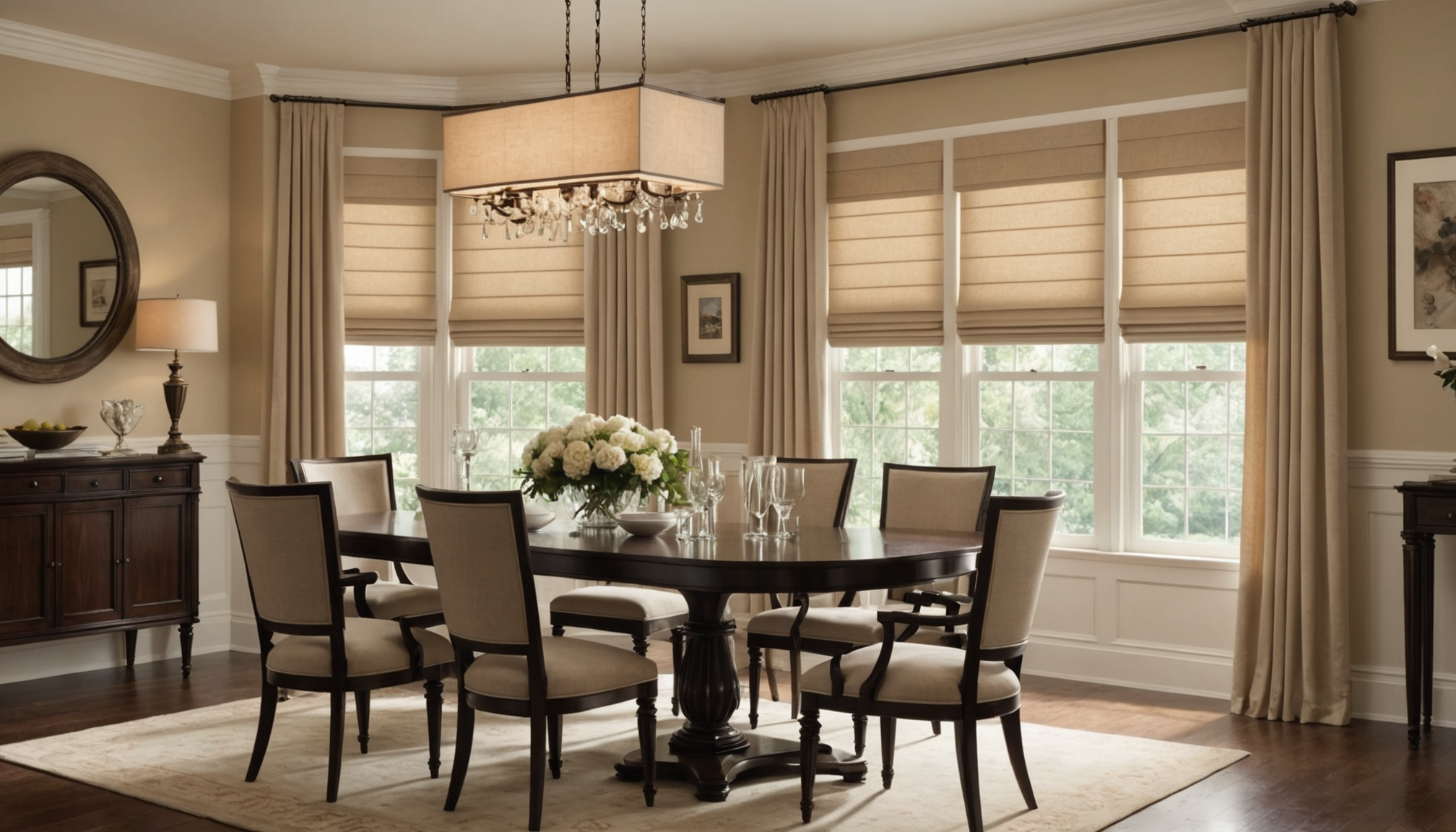
- Roman Shades: Known for their elegant pleated look, they stack up evenly when lifted and are perfect for adding a touch of formality to any room.
- Cellular Shades: Also known as honeycomb shades, they are excellent for insulation as they trap air within their cellular structure.
- Sheer Shades: These combine the functionality of a blind with the softness of a shade, gently diffusing light while providing privacy.
To assist in comparing the key features of these window treatments, consider the following table:
| Type | Material | Light Control | Insulation | Best Use |
| Venetian Blinds | Wood/Aluminum/Plastic | Adjustable | Poor | Standard Windows |
| Vertical Blinds | Fabric/Plastic/Metal | Adjustable | Moderate | Large Windows/Doors |
| Roller Shades | Fabric | Limited | Moderate | Bedrooms/Living Rooms |
| Roman Shades | Fabric | Limited | Moderate | Formal Settings |
| Cellular Shades | Fabric | Moderate | Excellent | Energy Efficiency |
Understanding these variations will help you choose a window treatment that best meets your needs for both functionality and aesthetics. Ultimately, the right window treatment can transform a room, adding character while fulfilling practical requirements such as privacy, light control, and energy efficiency.
Measuring your windows
Accurate measurements are key to ensuring your blinds or shades fit perfectly, providing the functionality and aesthetic appeal you’re looking for. Here’s a step-by-step guide to help you measure your windows with precision:
- Gather Your Tools: Before starting, make sure you have a steel measuring tape, a pencil, and paper for notes. A step ladder might also be necessary for higher windows.
- Decide Between Inside and Outside Mount: You first need to determine whether you’re mounting your blinds inside or outside the window frame. The choice may influence the measurement approach:
- Inside Mount: This offers a clean look and preserves the trim of your windows. However, it requires precise measurements and uniform window recess dimensions.
- Outside Mount: This can create the illusion of larger windows or hide less-than-perfect frames. It is also more forgiving of measurement errors and irregular recess shapes.
- Measure the Width:
- For an Inside Mount: Measure the inside width of the window at three points: top, middle, and bottom. Record the smallest measurement, rounding down to the nearest 1/8 inch to ensure the blinds will fit within the frame.
- For an Outside Mount: Measure the width from where you want the edges of your blinds to be. Add extra to this width to ensure proper coverage. Typically, you add at least 2 inches on each side for a total of 4 inches extra width.
- Measure the Height:
- For an Inside Mount: Measure the inside height of the window in three places: left, center, and right. Use the longest of these measurements for ordering.
- For an Outside Mount: Measure the desired height from the top of the headrail location to the bottom end, considering at least 2 extra inches above the frame to account for the headrail and 3 extra inches below or more if you desire full coverage.
- Check for Any Obstacles: Make sure corner moldings, protruding handles, or other fixtures won’t interfere with how your blinds or shades hang. Obstructions might affect measurements, particularly for inside mounts.
- Double-Check Your Measurements: Re-measure each dimension to double-check your accuracy, especially if you are ordering custom-fit blinds. Mistakes can be costly and result in improper fitting.
- Consult Blinds’ Manufacturer Guides: If your selected blinds seemed to require specific measurement instructions due to design or mechanics, refer to the manufacturer’s guidelines for any additional direction or adjustments for atypical window types.
Careful measurement ensures that your chosen blinds or shades function correctly and look their best, making this a vital step in your selection process.
Choosing the right material
When it comes to choosing the right material for blinds or shades, the decision hinges on several key factors such as durability, aesthetics, maintenance, and functionality. Each material offers a unique set of benefits, greatly impacting the overall look and efficiency of your window treatments.
Understanding the Environment: Consider the room’s environment where the blinds or shades will be installed. For instance, high-moisture areas like kitchens and bathrooms may benefit from materials such as PVC or aluminum, which are resistant to warping and mildew. On the other hand, a living room or bedroom might be better suited with softer materials like fabric or wood, which offer a cozy and elegant feel.
Durability and Longevity: If durability is a top priority, materials like aluminum or faux wood are excellent choices. Aluminum blinds are lightweight and corrosion-resistant, making them a long-lasting option, while faux wood provides the classic look of natural wood but with added resistance to humidity and temperature fluctuations.
Aesthetic Appeal: The material you choose will significantly influence the room’s aesthetic. For a rich, warm appearance, natural wood or bamboo can add texture and depth, complementing a variety of decor styles from rustic to modern. On the contrary, fabric shades can introduce color and pattern, providing an avenue for creativity and personalization in your decor strategy.
Light Control and Privacy: Different materials offer varied levels of light filtration and privacy. Thicker materials like blackout fabric or wood provide excellent privacy and light-blocking capabilities, making them ideal for bedrooms or media rooms. Lighter materials such as sheer fabrics or certain peelable plastics allow for diffused light to enter while still offering some degree of privacy, suitable for spaces like living rooms or dining areas.
Energy Efficiency: Consider cellular shades if energy efficiency is a concern. These shades are designed with a honeycomb structure that traps air, providing excellent insulation properties to help maintain a comfortable indoor temperature while potentially reducing energy bills. Fabric and wood also offer moderate insulation but might not be as efficient as specialized designs like cellular shades.
Maintenance: Ease of maintenance is another crucial element. Materials like PVC and faux wood are easy to wipe clean and require minimal upkeep, making them ideal for busy households or homes with pets and children. In contrast, fabric shades may need more careful handling, involving occasional vacuuming or professional cleaning to maintain their appearance and functionality.
In conclusion, selecting the right material involves balancing aesthetic preferences with practical considerations, ensuring that your blinds or shades not only complement your decor but also provide the desired functionality for your living space.
Considering light and privacy needs
When selecting blinds or shades for your home, it’s essential to weigh your specific light and privacy requirements carefully. The right choice will depend largely on how much natural light you want to let into each room, as well as how much privacy you need from the outside world.
For those who enjoy a well-lit room, sheer shades or light-filtering fabrics could be an excellent option. They allow plenty of daylight to brighten your space while still maintaining a degree of privacy, perfect for living areas or kitchens where natural light is desired. On the other hand, blackout shades or thicker materials such as lined Roman shades are ideal for bedrooms or media rooms where you might need complete darkness for sleeping or to reduce glare.
If privacy is your top priority, especially for rooms facing a busy street or neighboring homes, consider options like slatted blinds, which allow you to adjust the slats to control the view from outside. Venetian blinds or vertical blinds give you the flexibility to let light in while obstructing the outside view, offering both privacy and light control.
Rooms like bathrooms require particular attention to privacy while still needing some natural light. Frosted shades or top-down/bottom-up shades can be useful in these spaces since they allow you to block the lower part of the window for privacy while letting light in through the top. Similarly, cellular shades can be an excellent choice for providing privacy while offering varying degrees of light control depending on their transparency.
The orientation of your windows can also impact your choice. East or west-facing windows experience strong sunlight at certain times of the day, so you might opt for solar shades that reduce glare and UV exposure while still offering an outside view. Alternatively, for south-facing windows that receive consistent sunlight, shades with reflective coatings can help manage heat and minimize fading of furnishings.
Moreover, integrating smart technology allows for more custom light and privacy management. Motorized blinds can be programmed to open and close at specific times, adjusting to the natural light throughout the day, which is not only convenient but also improves energy efficiency.
Incorporating these factors into your decision-making process will ensure that your blinds or shades serve the dual purpose of enhancing your lifestyle and protecting your space, creating a comfortable and private environment tailored to your needs.
Coordinating with your decor
When choosing blinds or shades, aligning them with your existing decor is a crucial step that can elevate the overall ambiance of a room. The key is to consider the style, color palette, and theme of your space to ensure that the window treatments complement or enhance your existing design choices.
Start by assessing the color scheme of your room. If your decor is predominantly neutral, selecting blinds or shades in similar tones can maintain a cohesive look. Alternatively, if you want your window treatments to stand out, opt for bolder colors or patterns that create a focal point in the room. This approach works well with minimalist or modern interiors where pops of color add a lively touch.
For rooms with a consistent theme, such as coastal or rustic styles, materials can play a significant role in complementing the space. Wooden blinds or bamboo shades can reinforce these natural themes, providing an organic feel that resonates with the decor. In contrast, sleek metal or vinyl blinds are better suited for industrial or contemporary designs, giving a clean and polished finish.
Consider the texture as well. Textured fabrics or woven shades can add depth and interest to a room, especially if other elements are more straightforward. An opulent space might benefit from the elegance of Roman or draped shades, which bring a soft contrast to hard lines and sleek surfaces.
Additionally, matching hardware and finishes to your existing furnishings can tie the room together. If your decor features brushed nickel elements, for example, choosing blinds with a similar metallic finish can provide a seamless look.
Lastly, don’t underestimate the power of consistency in style. If your home features eclectic or transitional decor, choose versatile shades that can adapt to various styles, ensuring ease of coordination as your design preferences evolve.
When thoughtfully integrated, window treatments are more than just functional elements—they become critical components of a room’s identity, adding personality, enhancing harmony, and elevating the overall aesthetic appeal of your home.
In conclusion, the perfect blinds or shades can dramatically influence the feel and functionality of your space. By understanding the variety of window treatments, accurately measuring your windows, carefully selecting materials, considering your light and privacy needs, and coordinating with your interior decor, you can choose window coverings that not only serve practical purposes but also enhance your living environment’s beauty and comfort.