Ensuring the structural integrity of your patio is crucial not only for aesthetic purposes but also for safety and longevity. A well-maintained patio can enhance your outdoor living experience, increase your home’s value, and prevent costly repairs in the long run. Therefore, taking the time to inspect your patio for any structural issues is a wise investment in your property.
Begin by examining the foundation of the patio. Look for signs of sinking or settling, which can indicate underlying foundation problems. Uneven surfaces or noticeable dips can suggest that the patio is not level, potentially leading to water accumulation and frost damage over time. It’s advisable to address any significant leveling issues with a professional in the home improvement industry to ensure proper assessment and repairs if necessary.
Next, check for cracks in the concrete, stone, or pavers. While small, hairline cracks are generally not a structural concern, larger or rapidly spreading cracks can compromise the patio’s integrity. These cracks can result from weather conditions, poor installation, or natural wear and tear. Monitoring these areas will help prevent them from worsening, and sealing cracks promptly can prevent further damage.
Another important area to inspect is the structural joints. These are the areas where different sections of the patio meet, such as where the patio connects to the house or transitions to stairs. It’s essential to ensure that these joints are secure and free from gaps, as any weakness here can lead to structural failure. A regular check on these areas can reinforce the stability of your patio.
Common Structural Issues and Indicators:
| Issue | Indicators |
| Foundation settling | Uneven surface, water pooling |
| Cracking | Visible cracks more significant than hairline |
| Weak joints | Noticeable gaps, loose connections |
Use a level to check the flatness of surface areas and ensure that there are no unwanted slopes, which could disrupt drainage and create slip hazards. If you notice that certain areas are not level, it may be necessary to adjust or replace slabs or pavers. This task might require professional expertise to prevent inadvertent damage to the structural balance of the patio.
For those integrating smart home elements, such as outdoor lighting or audio systems, it’s vital to ensure that electrical components and conduits don’t compromise the patio’s structural integrity. Ensure all wiring is safely housed and doesn’t interfere with the patio’s main support structures. Regularly inspect these elements to maintain patio safety and functionality.
Routine inspection and early detection of structural issues can significantly impact the longevity and safety of your patio. By addressing these concerns proactively, you not only enhance the enjoyment and utility of your outdoor space but also act as a responsible property owner safeguarding your investment.
examining surface condition
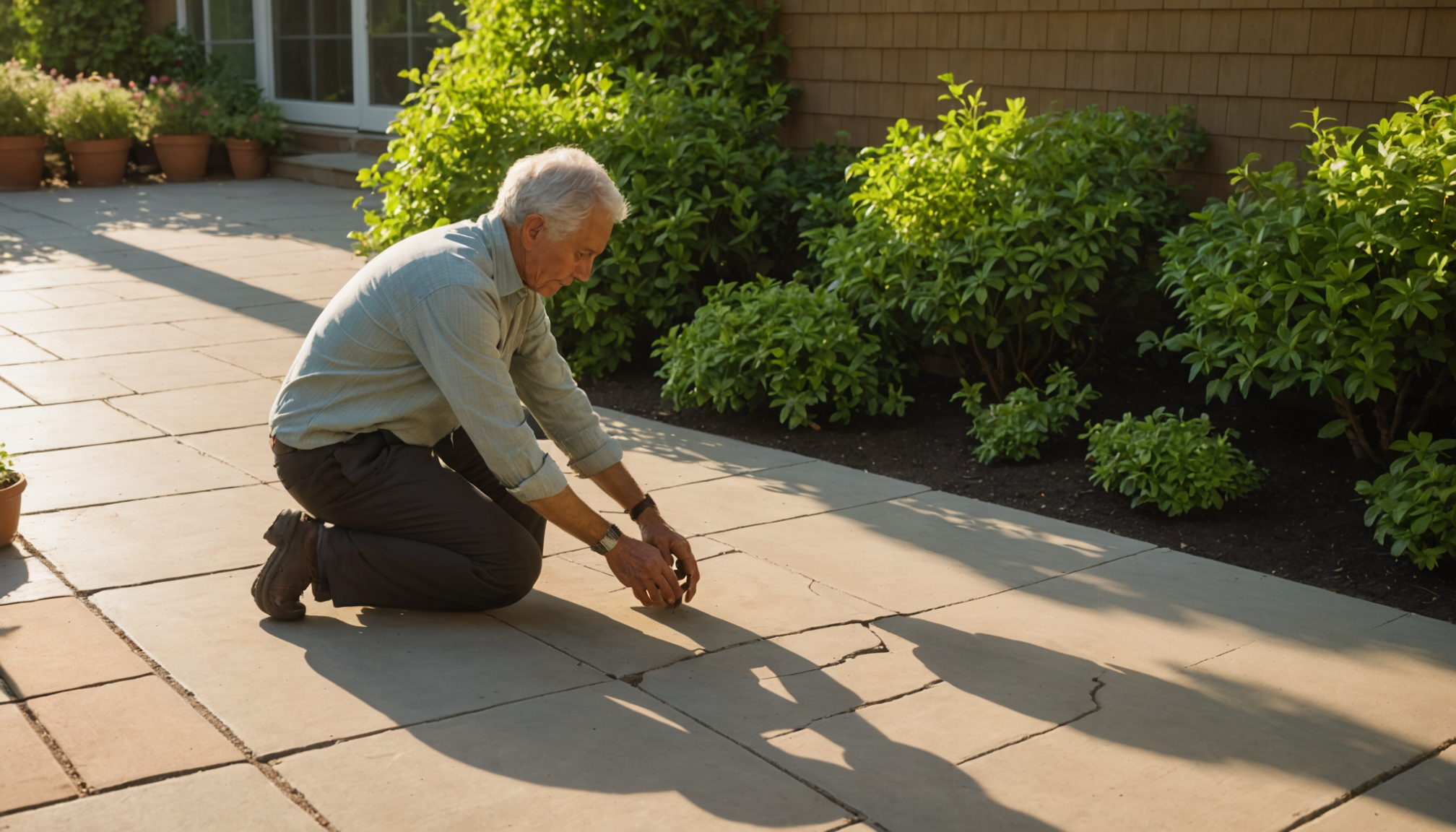 When inspecting the surface condition of your patio, it’s essential to pay attention to details that might affect both aesthetics and functionality. A thorough surface examination can identify problems early on, helping prevent more significant issues and contributing to the overall enjoyment of your outdoor area. Follow these steps to ensure a comprehensive inspection:
1. Check for Stains and Discolorations:
– Observe the surface for any visible stains or discolorations. Common causes include spills, moss, mold, or mildew. To assess the extent of the issue, use a flashlight if needed, especially around shaded areas where moss and mildew are more likely to thrive.
– For stains, consider washing the surface with a pressure washer or using a mild cleaning solution suitable for outdoor use. Be cautious with chemical cleaners to avoid damaging the surface material.
2. Evaluate for Chips or Dents:
– Carefully inspect the surface for chips or dents, particularly in concrete, stone, or pavers. These imperfections can occur due to heavy foot traffic, dropping heavy objects, or natural wear and tear.
– Note the location and size of any damage. For minor chips, filling them with a patching compound can maintain the look and functionality of your patio. In cases of significant damage, replacing individual stones or sections might be necessary.
3. Look for Surface Unevenness:
– Run your hand over the surface to feel for any protrusions or depressions. Use a straightedge or level to check the evenness of larger areas. Uneven surfaces are not only aesthetically unpleasing but can also pose a tripping hazard.
– Address any uneven areas by leveling them with the appropriate materials, such as sand or polymeric sand for pavers, combined with proper compaction to prevent recurrence.
4. Inspect for Sealer Condition (If Applicable):
– Determine whether your patio has a sealer applied by looking for a noticeable sheen or performing a water test – water beads indicate the presence of an effective sealer.
– If the sealer is worn down, consider reapplying it to protect the surface from stains and weather damage. Choose a sealer that matches your patio material for optimal protection and longevity.
5. Assess Joint Materials:
– Examine the condition of the joint materials between pavers or tiles. Crumbling or missing joint material can lead to shifting surfaces or allow weed growth.
– Refresh the joints with new sand or filler as needed. Using polymeric sand can provide additional stability and prevent weed growth.
A regular check-up on the surface condition of your patio can significantly enhance its appearance and functionality, ensuring that your outdoor space stays beautiful and safe for years to come. These homeowner tips for inspection and maintenance are invaluable in prolonging the life of your patio and avoiding costly home improvement repairs.
checking furniture and fixtures
Conducting regular inspections of the furniture and fixtures on your patio is an important aspect of maintaining a comfortable and inviting outdoor space. By ensuring everything is in good working order, you can avoid unexpected issues and extend the lifespan of your outdoor furnishings— thereby creating a pleasant area for relaxation and entertainment.
Begin by closely inspecting all your patio furniture, such as tables, chairs, and loungers. Look for signs of wear and tear, which could include rust on metal frames, loose screws or bolts, frayed edges on fabric, or cracks in wooden or plastic components. Addressing these issues promptly can prevent further damage and potentially costly replacements. For instance, if you notice any rusty areas on metal furniture, use a metal brush or sandpaper to remove rust, then apply a protective coating to prevent future corrosion.
Next, pay special attention to any upholstery or fabric elements. Check for fading or mildew, which are common issues for outdoor textiles exposed to the elements. If the fabric is removable, follow manufacturer instructions for cleaning, and consider applying a fabric protector spray to help resist water and UV rays. For advanced protection and longevity, store cushions indoors during harsh weather conditions or invest in quality furniture covers.
It’s also invaluable to inspect any patio umbrellas, awnings, or other shade structures. Open and close these mechanisms to ensure they function smoothly. Look for any tears or holes in the fabric and replace any parts as needed to maintain their effectiveness against sun and rain. Regularly washing these fabrics can prevent stains and buildup of pollen and debris.
Don’t overlook the smaller fixtures like lighting and decorative elements, which can make a substantial difference in the ambiance of your patio. Inspect any integrated smart home features, such as outdoor lighting systems, for loose wires or malfunctioning parts. Clean dust or bug buildup from light fixtures and replace burnt-out bulbs promptly. For solar-powered options, ensure that solar panels are clean and unobstructed.
Finally, examine the condition of any outdoor rugs or mats. These can help define seating areas and add comfort but require proper maintenance to stay in top shape. Shake them out regularly to remove dirt, and deep clean them as needed, checking for signs of wear, unraveling edges, or mold growth. Consider rotating rugs occasionally to promote even wear and protect areas that receive the most foot traffic.
By taking these proactive steps, homeowners can ensure that their patio furniture and fixtures remain visually appealing and fully functional. These careful inspections and maintenance practices contribute to an enjoyable outdoor living space, reflecting positively on your overall home improvement efforts.
inspecting for water drainage
Ensuring proper water drainage on your patio is crucial for preventing water-related issues that could compromise its structure and appearance. Poor drainage can lead to standing water, which not only discolors surfaces but also fosters mildew and algae growth, making the area unsafe and unsightly. To maintain your patio’s health and longevity, it’s essential to inspect your drainage systems regularly and make adjustments as needed.
Start by observing how water flows across your patio during a heavy rainstorm. Pay close attention to any areas where water pools or takes longer to drain. These spots can often indicate insufficient slope or improperly positioned drains. If you notice these issues, you might need to regrade your patio surface to ensure it directs water effectively towards drainage points. Remember that a subtle slope of about 1-2% away from your home is generally recommended to facilitate proper drainage.
Next, inspect the existing drainage channels or systems you have in place, such as gutters, downspouts, or French drains. Check for blockages caused by leaves, dirt, or other debris that may have accumulated. Keeping these channels clean ensures they work efficiently. You might consider installing leaf guards on gutters to prevent frequent clogs and ensure that rainwater is effectively channeled away from your patio and home’s foundation.
If you have any surface drains or catch basins integrated into your patio, check that they are not clogged. Regular cleaning these areas can prevent overflow and water buildup. Pour a bucket of water into these drains to see how well they handle flow. If you find slow drainage, it might be necessary to clear the line of obstructions or consult a home improvement professional for more significant issues.
Additionally, consider checking for any vegetation planted around the patio that may influence water dynamics. Large shrubs or trees can sometimes disrupt drainage channels or prevent adequate absorption of water. If you find any such impacts, consult with a landscape expert to trim or replace plants that may be too close to your patio.
Remember that during colder months, freezing water in poorly drained areas can expand and create cracks or other damage to your patio surfaces. By inspecting and maintaining your drainage systems regularly, you can prevent these potential hazards and keep your patio looking and functioning at its best.
Finally, consider integrating smart home technology into your drainage inspection routine. Devices such as moisture sensors can alert you to excess water buildup, allowing for immediate attention and reducing the chance of damage. By staying proactive with these inspections and taking preventative actions, you ensure that your outdoor space remains a safe, dry, and enjoyable area for all your relaxation and entertainment needs.
evaluating safety features
When evaluating the safety features of your patio, it’s important to consider several key factors to ensure it remains a secure and welcoming environment for you and your guests. Start by examining the stability of the railing systems, particularly if your patio is elevated or located near a slope. Check for loose or wobbly railings, which can pose a significant safety risk. Tighten any loose fasteners, or replace worn-out components as needed to maintain the integrity of your railings. If your existing railings feel outdated or don’t meet current safety standards, investing in an update can be a smart home improvement project that enhances both safety and aesthetics.
Next, assess the lighting on your patio. Adequate illumination is essential for preventing accidents during evening gatherings or nighttime use. Identify areas that may be poorly lit, such as steps and walkways, which require additional attention. Consider installing energy-efficient LED lights or motion-sensor fixtures to improve visibility without increasing your electricity bill significantly. For a more high-tech approach, smart home lighting systems can allow you to control your patio lights from your smartphone, providing convenience and flexibility in managing your outdoor space.
Another critical aspect to inspect is the condition of any nonslip surfaces or treatments. Slip-resistant surfaces are vital for preventing falls, especially in wet conditions. Examine the effectiveness of nonslip coatings or mats, and replace or reapply as needed. If you notice that certain areas lack adequate slip resistance, consider adding textured paints or additional mats to boost safety measures. For homeowners in regions with harsh winters, it’s also wise to have supplies on hand for de-icing these areas to maintain safety during icy conditions.
Additionally, evaluate any gates or barriers if your patio is adjacent to a pool or spa. Ensure these features comply with local safety regulations and are kept in good working order to prevent unauthorized access by children or pets. Regularly check latch mechanisms and self-closing hinges to ensure they function correctly and make necessary adjustments promptly.
Finally, if you have a fire pit or built-in grill on your patio, inspect these components to verify they operate safely. Clear debris from around fire features and ensure gas lines show no signs of leaks or damage. It’s also worth maintaining a clear zone around fire elements and having a fire extinguisher readily accessible in case of emergencies.
Continuous improvement and regular inspection of these safety features not only protect people but also enhance the enjoyment of your outdoor environment. Investing time and effort into maintaining and upgrading these elements reflects positively on your home improvement journey and ensures your patio remains a secure haven for relaxation and entertainment.
In conclusion, inspecting all aspects of your patio, from structural integrity to safety features, ensures a safe, durable, and enjoyable outdoor space. By taking proactive homeowner tips and maintenance actions, you extend the life of your patio investments and create a welcoming environment for all.