Choosing the right color palette for your entryway is a crucial step in setting the tone and character of your home. Often serving as the first impression for guests, your entryway should reflect your personal style while also providing a welcoming atmosphere. With the multitude of color options available, navigating through them to find the perfect match requires a thoughtful approach.
First, consider the purpose and size of your entryway. If it’s a small space, opting for lighter colors can help make it feel larger and more open. Conversely, if your entryway is spacious, you have the freedom to choose deeper, more saturated colors that bring warmth and coziness. For DIY enthusiasts, experimenting with bold choices can serve as a creative outlet that sets your home apart.
To ensure your color palette is cohesive throughout your home, think about how your entryway connects to adjacent rooms. Selecting complementary shades can create a seamless flow from room to room. Consider using a color wheel as a visual guide to identify complementary hues that enhance each other. For example, a soft gray entryway can serve as a neutral backdrop, accentuated by pops of color from the surrounding areas.
If you’re unsure about which direction to take, homeowner tips suggest exploring nature-inspired palettes. These often include earth tones like beige, terracotta, or sage, providing a calming and balanced environment. Additionally, consider the emotional impact colors can have; blues and greens evoke tranquility, while yellows and reds introduce energy and warmth.
Matching the color palette to your home’s architectural style is also key. A traditional home may benefit from classic colors like navy or forest green, whereas a modern design might be better suited to monochromatic schemes with bold accents. For those concerned about energy efficiency and insulation, color choice can play a role, too. Lighter colors can reflect more light and heat, which can be particularly advantageous in warmer climates.
| Color Style | Suggested Use |
| Light Neutrals | Small entryways needing more light |
| Bold Colors | Large spaces or to make a statement |
| Earth Tones | Creating a calming, natural vibe |
| Pops of Color | Accent walls or decorative elements |
Remember that testing your paint samples is an invaluable step. Paint a small section of your entryway walls and observe how the color changes throughout the day with natural light. This will give you a better idea of how the finished product will look and help avoid any potential regrets after the project is complete. By taking the time to choose the right color palette, you can transform your entryway into a beautifully inviting space that truly feels like home.
creating a focal point
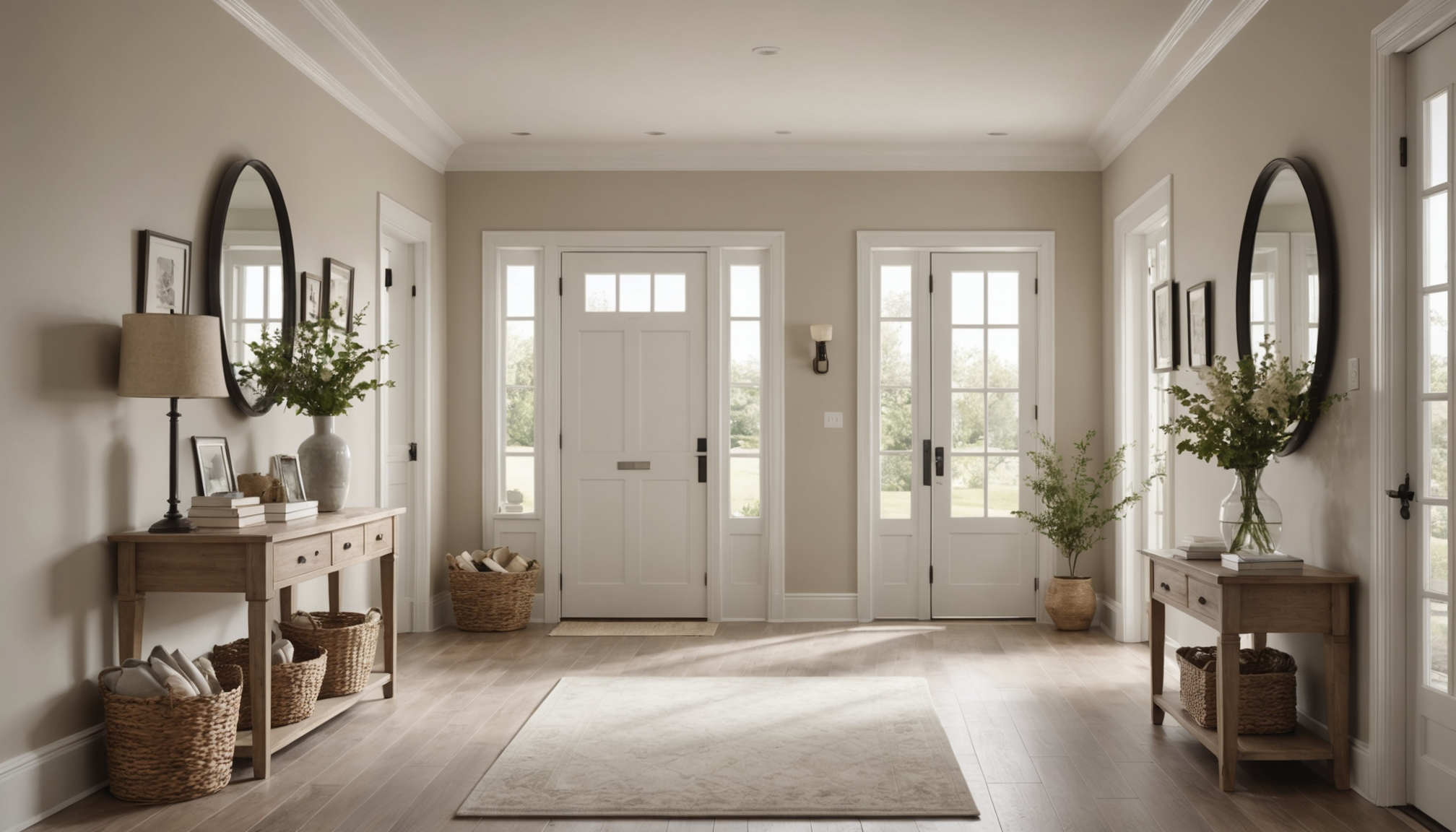 Creating a focal point in your entryway is an excellent way to add character and make a statement as guests enter your home. The focal point serves as a visual anchor, drawing attention and setting the tone for the rest of your house. Here’s how you can create a stunning focal point with paint:
1. Select a Feature Wall:
– Choose one wall in your entryway that naturally draws the eye. It’s often the wall opposite the entrance, or the one behind a piece of furniture like a console table. This wall will serve as the canvas for your focal point.
2. Choose a Bold Color or Pattern:
– Opt for a bold color that complements your overall entryway palette yet stands out distinctly. Deep blues, rich greens, or vibrant oranges are great choices depending on your home’s style.
– Alternatively, use a pattern such as stripes, chevron, or a geometric design. These can be painted using painter’s tape to ensure clean lines and an eye-catching effect.
3. Incorporate Texture:
– Add texture by using techniques like sponging, rag rolling, or stippling. These DIY methods can enhance the visual interest and add depth to the wall.
– Consider using textured paint products that mimic the look of materials like concrete or wood.
4. Highlight Architectural Features:
– If your entryway has unique architectural elements like molding or wainscoting, use paint to highlight these features. A contrasting color can make them pop and become the focal point.
– Accentuate recessed areas or alcoves with a contrasting shade to add dimension and intrigue.
5. Frame the Space:
– Use trim or molding to frame the focal point area. Paint the frame in a complementary or contrasting color to enhance the feature.
– Adding a painted border around art or a mirror can help focus attention on the central feature.
6. Add a Painted Mural or Artwork:
– For a personal touch, consider painting a mural or large-scale artwork directly onto the wall. This could be a nature scene, abstract design, or a graphic motif that reflects your personality.
– Consult DIY tutorials or homeowner painting guides for inspiration and techniques to create a professional finish.
7. Consider Lighting Effects:
– Use lighting to highlight your painted focal point. Install sconces or track lighting to cast light on the feature wall, enhancing its prominence.
– Experiment with different light temperatures to see which best complements the colors and textures you’ve chosen.
8. Coordinate with Furnishings and Decor:
– Arrange furniture and decorative items to enhance the focal point. Place a key piece, like a statement console or unique artwork, in front of the feature wall to amplify its effect.
– Accessories such as vases, sculptures, or a bold rug can add layers and further draw attention to the painted focal area.
By focusing on creating a unique and personalized focal point, not only does the entryway become more welcoming, but it also sets a stylistic theme for the rest of your home. With careful planning and a little creativity, painting your entryway can transform it into an impressive first impression space.
incorporating different painting techniques
When exploring different painting techniques to enhance your entryway, consider using methods that introduce texture, depth, and personality to the space. Incorporating such techniques can turn a simple entryway into a captivating gateway to your home, showcasing creativity while also serving practical purposes. Here’s how you can elevate your entryway with inventive painting approaches:
1. Sponging Technique:
– Sponging is a simple yet effective technique to add texture and intricacy to your walls. By using a natural sea sponge, you can dab paint onto a base coat, creating a soft, textured look. Choose colors that complement your overall palette, and remember that this technique works beautifully with both subtle and bold hues.
2. Ombre Effects:
– Ombre painting is perfect for creating a gradient effect that subtly changes shade from dark to light, drawing the eye upward and adding a sense of height to the room. This can be particularly beneficial in smaller entryways that you’d like to feel more open and airy. DIY tutorials can guide you in blending the colors seamlessly for a professional finish.
3. Rag Rolling:
– To add a vintage or rustic touch, rag rolling is an excellent choice. By rolling a crumpled rag over a wet coat of paint, you can introduce an interesting layered look that imitates the appearance of worn fabric. This technique is ideal for homeowners looking to add a touch of old-world charm to their entryway décor.
4. Stencils for Precision:
– Use stencils to apply intricate designs or patterns onto your walls with precision. Whether you’re opting for elegant floral motifs or modern geometric shapes, stencils offer endless possibilities for adding decorative detail. This method allows for customization, giving you the flexibility to repeat designs or keep them as unique accents.
5. Color Washing:
– Color washing involves applying a translucent glaze over a base coat, lending a subtle and sophisticated depth to the walls. This technique can be particularly striking when you want to create an impression of aged or weathered walls with a tonal, more organic feel.
6. Striping for Impact:
– Stripes can dramatically change the perception of space within your entryway. Horizontal stripes can make your entryway look wider, while vertical ones can increase the perception of height. Use painter’s tape to mark out clean lines and diversify your palette by choosing colors that maintain harmony yet add a visually interesting contrast.
7. Faux Finishes:
– Achieving the look of natural materials like marble, leather, or stone through faux finishes can offer a luxurious touch without the cost. Utilizing this technique can give your entryway an upscale feel while providing the opportunity to play with textures and appearances tailored to your aesthetic preferences.
By incorporating these diverse painting techniques into your entryway refresh, you’re not only improving the visual appeal but also enhancing its functionality. Techniques like ombre and striping can work to manipulate perceived spatial boundaries, while sponge and stencil methods offer ways to express personal style. For those who favor DIY projects, experimenting with these techniques can be a rewarding and creative undertaking, transforming your entryway into an artful introduction to your home.
maximizing natural light
Harnessing natural light in your entryway can dramatically enhance the overall atmosphere, making the space feel welcoming and expansive. Light can transform even the smallest entryways into bright and inviting areas, offering a pleasant introduction to your home.
Firstly, take a moment to assess the available natural light in your entryway. Consider the number and size of windows or the presence of a glass door that might already be contributing to the room’s brightness. For entryways that lack ample sunlight, strategic paint choices can help you maximize the light that is available.
Choose paint colors that reflect light effectively. Lighter shades such as soft whites, creams, and light pastels not only reflect more light but also create a sense of space, giving the illusion of a larger area. If your entryway receives minimal sunlight, opt for paints with a satin or semi-gloss finish, as they bounce light around the room more effectively compared to flat finishes. This choice offers a subtle sheen that enhances illumination while being durable enough to withstand the heavy use that entryways often endure.
Highlight the importance of strategically placing mirrors, which serve as excellent tools in any entryway design. A well-placed mirror can reflect natural light around the room, amplifying its brightness while adding depth and dimension. Consider installing a large mirror opposite a window or door to maximize the light reflection and enhance the overall ambiance.
For entryways fortunate enough to have ample natural light, deeper, more saturated paint colors can be an exciting choice without darkening the space too much. However, to maintain balance and support the flow of light, focus on accents – such as painted trim or doorframes – in lighter shades.
Incorporating a glass panel element in the entryway can further optimize natural light. Installing a door with frosted or textured glass can preserve privacy while allowing sunlight to filter through, brightening the area throughout the day.
Homeowner tips often emphasize the dual benefits of using paints with reflective qualities, not just for enhancing light but also for improving insulation. Certain paints are formulated to help maintain temperature, potentially lowering energy costs. If energy efficiency is a concern, consult with a DIY guide on choosing eco-friendly and utility-conscious paint options.
Ultimately, enhancing natural light is key to transforming your entryway into a vibrant and inviting space. By deliberately selecting the right paint finishes, employing reflective surfaces like mirrors, and considering the architecture of your doors and windows, you can cultivate an entryway that embodies both warmth and openness as it greets you and your guests.
using durable paint finishes
Opting for durable paint finishes in your entryway is not just about aesthetics but also about the longevity of your design. Since the entryway is one of the most frequently trafficked areas in a home, selecting the right paint finish is critical to ensure it withstands daily wear and tear while continuing to look fresh.
Start by understanding the different types of paint finishes available. While flat or matte finishes might be appealing for their contemporary aesthetic, they are often less durable and harder to clean. Instead, consider satin, eggshell, or semi-gloss finishes. A satin finish is a versatile choice, offering a subtle sheen that can withstand cleaning and scuffing without showing imperfections as readily as glossier finishes. An eggshell finish is slightly less glossy than satin but still provides a balance between beauty and practicality, making it suitable for homeowners looking to keep maintenance to a minimum.
Semi-gloss finishes, on the other hand, are extremely durable and easy to clean, which makes them perfect for high-traffic areas like entryways. This finish can handle frequent cleaning, making it a practical choice for families with children or pets. Moreover, its reflective properties add a touch of brightness and can help in dispersing natural light, only enhancing the welcoming feel of your space.
Moreover, durability extends beyond the choice of finish. Consider using high-quality paint specifically designed for high-traffic zones. These paints are formulated with superior binders that create a tough, scratch-resistant surface. Many options also include advanced technologies that prevent staining and resist moisture, which adds an extra layer of protection against the elements frequently entering through the front door.
For DIY enthusiasts looking to optimize their entryway project, using durable paint finishes is a wise investment that pays off in both maintenance and appearance. Homeowner tips often recommend testing a small patch of your chosen paint to observe how it performs under your specific lighting conditions and usage demands. This foresight can offer insights into the longevity and cleanliness of the paint, ensuring your entryway remains vibrant and inviting for years to come.
In addition to considering the finish and durability, it’s important not to overlook the role of color in maintaining the appearance of your entryway. Darker colors might camouflage dirt better, whereas lighter hues can highlight imperfections, even with a durable finish. However, the right durable paint should simplify the cleaning process, regardless of color choice.
Ultimately, by selecting the right combination of color, sheen, and durability, you can protect your entryway from the daily hustle while enhancing its aesthetic appeal, all with the peace of mind that comes with a well-crafted DIY project or professional touch.
In conclusion, painting your entryway is an opportunity to set the tone for your home, using creativity to make a lasting first impression. Whether prioritizing the vibrancy of colors, the intrigue of various techniques, or the practicality of durable finishes, every decision contributes to crafting an entryway that reflects your personal style with functional elegance. As you embark on transforming this essential space, remember that the right choices not only enhance visual beauty but also ensure longevity and resilience, enriching your entryway with both charm and durability.