When it comes to soundproofing your entryway, upgrading your door is one of the most effective steps you can take. It’s critical to recognize that the door serves as both a functional and aesthetic component of your home. It’s not just a barrier for entry or a passageway; it plays a significant role in minimizing the transfer of noise from outside environments. Whether it’s the bustling street noise or the lively sounds from your family gatherings drifting from the kitchen, a well-upgraded door can make a substantial difference.
To start with, one of the quintessential changes you can make is replacing your standard hollow-core door with a solid-core door. Hollow-core doors are commonly used due to their affordability but they lack mass, making them ineffective at sound retention. Solid-core doors, on the other hand, are denser and provide a more formidable barrier against sound penetration. Though they might be an investment, they can greatly enhance your entryway’s ability to keep unwanted noise at bay.
Here is a simple comparison to showcase the effectiveness:
| Feature | Hollow-Core Door | Solid-Core Door |
| Soundproof Effectiveness | Low | High |
| Durability | Moderate | High |
| Cost | Low | Moderate |
| Weight | Light | Heavy |
Furthermore, you could consider adding an automatic door bottom or sweep. This simple device attaches to the bottom of the door and can seal the gap between the door and the floor, which is often a major conduit for sound leakage. An automatic door sweep activates as the door closes, making it unobtrusive and highly effective.
Additionally, employing a soundproofing seal or gasket around the edges of the door frame can substantially reduce sound ingress. These seals prevent sound from sneaking through tiny spaces around the door edges, particularly important for older doors or frames that may have shifted or expanded over time due to weather changes. Ensuring all around the door is tightly sealed is paramount for optimal soundproofing results.
For those considering a more expansive approach without hiring pros, some opt for double door systems, creating a “sound lock” which is similar to the vestibule setups found in professional environments. Although this may not always be practical in every home, it can essentially halve the loudness of noises that penetrate through, making it a viable option for entryways with enough space.
By implementing these door upgrades, not only will your entryway serve better as a noise barrier, but it will also add an extra layer of privacy and tranquility to your home environment.
Weather stripping
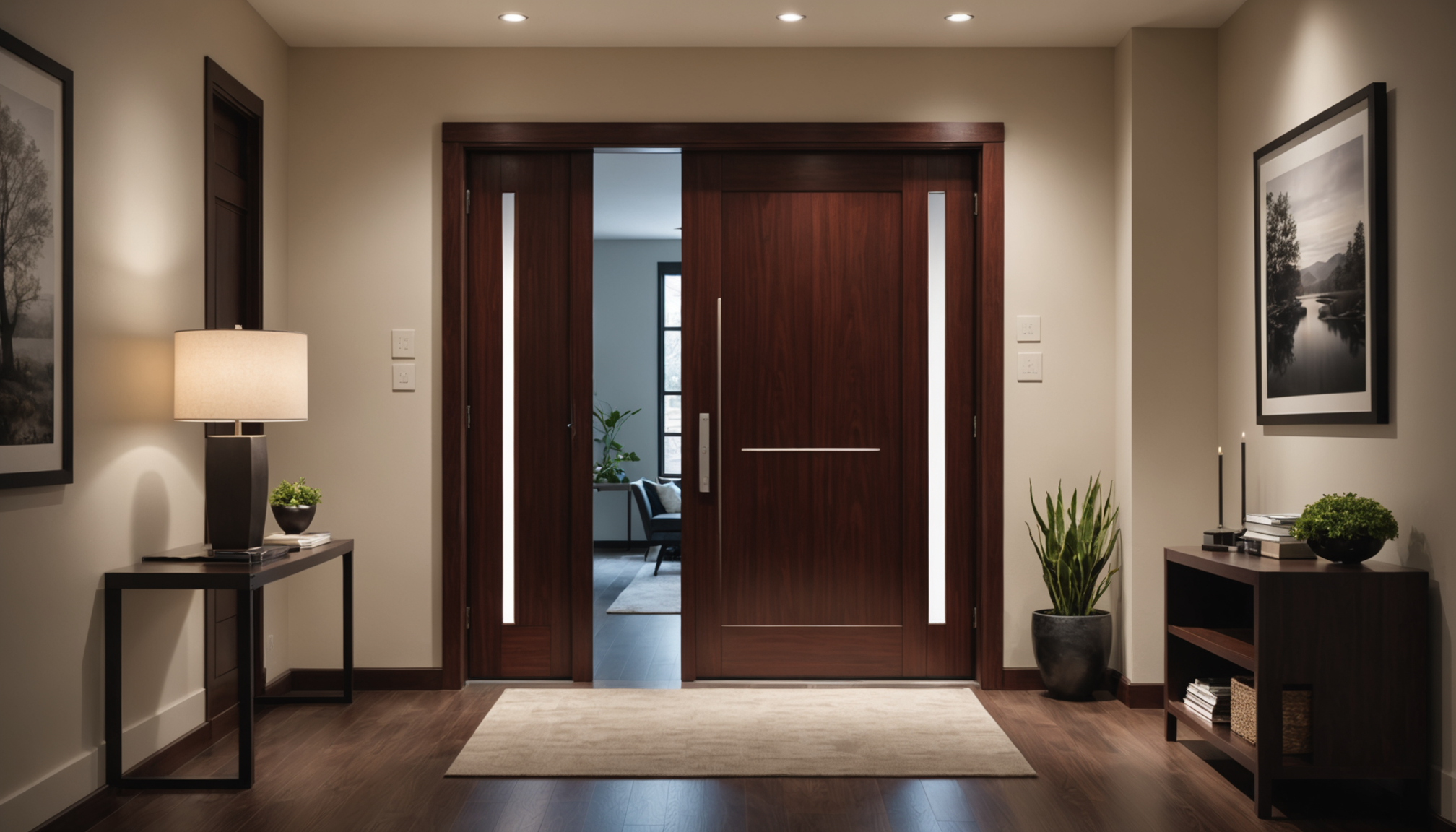 When aiming to soundproof your entryway without hiring pros, applying weather stripping is a practical and efficient way to significantly reduce noise transmission. It’s an affordable option, and when properly installed, it creates an effective seal that blocks unwanted sounds from seeping through gaps around the door. Here’s how you can achieve this:
- Select the Right Material: Weather stripping comes in various forms, such as foam tape, felt, vinyl, and rubber. Rubber and vinyl are particularly effective for soundproofing due to their density and flexibility. Consider the needs of your entryway and the degree of soundproofing required when choosing the material.
- Gather Necessary Tools and Materials: You’ll need the weather stripping material of your choice, scissors or a utility knife, a measuring tape, and possibly adhesive if your weather stripping doesn’t have a self-adhesive backing.
- Measure Around the Door Frame: Open the door and use your measuring tape to find the perimeter of the door frame, including the threshold. Ensure to account for all sides: top, bottom, and sides.
- Cut the Weather Stripping: Use scissors or a utility knife to cut strips of weather stripping according to the measurements taken. Aim for precision to ensure there are no gaps once installed, which could diminish the soundproofing effectiveness.
- Applying the Weather Stripping:
- Start with the top edge: Remove any backing if your stripping is self-adhesive, or prepare the adhesive if necessary. Firmly press the strip along the top edge of the door frame starting from one corner, smooth it out to avoid bubbles or unevenness.
- Proceed to the sides: Align the weather stripping along the side edges, firmly pressing it in place and ensuring there are no mismatched joints with the top edge.
- Seal the Bottom Gap: For the bottom, consider using a door sweep or an additional barrier like vinyl or rubber stripping that works effectively as a draft guard and provides a robust soundproofing advantage. Attach it to the bottom of the door ensuring a snug fit against the floor.
- Test and Fine-tune: Close the door to test the new seal. Look and listen for any remaining gaps that let noise through and reapply or add more weather stripping as needed for optimal results.
By meticulously sealing every gap around your door with the appropriate weather stripping, you create an entryway that serves effectively as a buffer against external noise, enhancing the tranquility of your home, whether the disruption comes from a bustling street or family activities flowing from the kitchen. This step is not only straightforward but can be completed by most DIY enthusiasts, saving the cost of hiring pros while still achieving professional-level soundproofing performance.
Acoustic panels
Utilizing acoustic panels strategically in your entryway is an incredibly effective method for diminishing the levels of noise entering your space. These panels are designed to absorb sound waves, rather than allowing them to bounce off hard surfaces, which is a typical occurrence in many homes. When strategically installed, they significantly reduce noise pollution, making your entryway, and consequently, your entire home, a more serene and noise-free environment.
Acoustic panels come in a variety of materials and designs, allowing you to choose something that complements the existing decor of your entryway. Most commonly, they are made from foam, fabric-wrapped rigid structures, or sustainable materials like recycled cotton. These choices not only cater to the aesthetic aspects but also ensure that the panels provide a high level of sound absorption.
When considering installation, think about the strategic placement of these panels. Typically, noise tends to seep through the walls adjacent to the entryway since they act as conduits for sound to travel further into your home. By mounting panels on these surfaces, you increase the chance of intercepting noise before it spreads. For a more polished look, covering entire sections with panels can serve the dual purpose of soundproofing and providing an attractive display.
Another advantage of these panels is their ability to be used in conjunction with other soundproofing techniques, such as curtain solutions or weather stripping. When combined, they provide a compound effect in reducing sound transmission. For instance, after the initial contact with acoustic panels, sound faces further reduction when encountering a properly sealed door with added weather stripping, dramatically enhancing the peaceful quiet of your home’s interior.
For households with children or those located near noisy areas, acoustic panels are a game-changer. They reduce the invasion of outside noise from busy streets or noisy neighbors, protecting the tranquility of your family’s personal space, including shared areas like the kitchen. This alleviates the stress associated with constant noise exposure and promotes a more calming and enjoyable home environment.
In summary, acoustic panels are a versatile and aesthetic solution for tackling sound issues in your entryway, providing an extra buffer against ambient noises that often seep through into your living space. Not only do they make your home quieter and more peaceful, but their easy installation and various designs add style and functionality without the hassle of hiring pros.
Rug placement
Incorporating rugs into your entryway is an effective and stylish way to enhance the soundproofing efforts of your space. Rugs serve as natural sound absorbers, especially when placed on hard flooring surfaces. They work by reducing the echo and minimizing the sound of footsteps, which can be particularly beneficial in a bustling household with family members frequently moving in and out.
To maximize their soundproofing potential, opt for thick, high-pile rugs or layered rugs. The increased thickness offers better sound absorption as it adds mass, an important factor in dampening noise. Consider using rug pads underneath; not only do they offer additional cushioning, but they also enhance the insulation properties of your rugs, creating an added layer of soundproofing.
For those looking to inject a bit of personality into their home décor, rugs come in various textures, colors, and patterns, which can complement or elevate the entryway’s aesthetic. They serve a dual purpose: while they absorb sound, they also enhance the visual appeal of the space, welcoming guests with warmth and style.
When strategically placed, rugs can be combined with other soundproofing solutions like acoustic panels or curtain solutions to create a more comprehensive approach. For instance, after reducing noise with an acoustic panel installation on adjacent walls, a rug in the entryway further muffles any residual sounds that might otherwise travel into the kitchen or additional living spaces. This layered approach helps in maintaining a serene atmosphere within your home, adding an extra buffer against the outside world’s hustle and bustle.
Furthermore, utilizing rugs offers a budget-friendly soundproofing option that doesn’t necessarily require hiring pros. It’s an easy DIY solution that can be tailored to meet the interior design preferences and noise reduction needs of your home. As families grow or household needs change, rugs can be easily moved or replaced, providing versatility unmatched by more permanent soundproofing installations.
Incorporate these thoughtful rug placements into your entryway to reinforce your soundproofing efforts, ensuring a welcoming and quieter environment that enhances the tranquility and function of your entire home.
Curtain solutions
One often overlooked yet highly effective method to enhance soundproofing in your entryway is the use of heavy, layered curtains. Not only do these curtains add a touch of elegance to your home’s aesthetic, but they also serve as a crucial barrier against unwanted noises. Specifically designed to dampen sound, these curtains can significantly reduce the intrusion of external noise, thereby increasing the tranquility of your home environment.
Choosing the right fabric is fundamental when selecting soundproof curtains. Opt for materials with significant weight and density, such as velvet or suede, as they are more effective at absorbing sound waves than lightweight fabrics. Look for curtains labeled as blackout or thermal, as these often have additional layers built-in that contribute to noise reduction. The density of the fabric acts as a shield, preventing noise from penetrating your interior spaces, making your entryway a much quieter zone.
The positioning of your curtains also plays a critical role in enhancing their soundproofing capabilities. Ensure that the curtains extend beyond the window frame, ideally touching the floor and covering the wall adjacent to the window to block noise from entering through any gaps. You may also consider using double curtain rods to layer your curtains, with a sheer or lightweight curtain closest to the window and a heavier curtain towards the interior. This arrangement not only blocks out more sound but also allows flexibility in light filtration and privacy.
Incorporating soundproof curtains can be a substantial step toward creating a complete sound barrier when used alongside other solutions like acoustic panels or thick rugs in your entryway. This combination provides a cohesive setup that addresses various pathways through which noise might infiltrate your home. Together with other interventions like door upgrades and weather stripping, curtains form a comprehensive soundproofing strategy that does not necessarily require hiring professionals, making it ideal for households looking for DIY solutions.
The added benefit of curtains is that they are a versatile addition to your home. As your family’s aesthetic preferences or functional needs change, curtains can be easily updated, repositioned, or replaced, providing a flexible and economical soundproofing option. Thus, they contribute to a peaceful, welcoming home environment without permanent alterations to your entryway.
By carefully integrating heavy, layered curtains, you ensure that your entryway not only exudes style but also supports your soundproofing efforts, promoting a calm and inviting atmosphere throughout your living space.
In conclusion, soundproofing your entryway effectively blends elements of design and practicality, transforming a part of your home that often gets overlooked into a calm and welcoming space. Each technique, from door upgrades and weather stripping to acoustic panels, rugs, and curtain solutions, offers unique benefits that synergize to substantially reduce noise infiltration. By personally tailoring these strategies to fit your specific needs and aesthetics, you gain control over your home’s acoustics without always needing to hire professionals. A well-soundproofed entryway not only enhances your living environment by curbing external disturbances but also elevates your home’s comfort and privacy, benefiting your family’s daily life.