When it comes to tree planting, few decisions are as crucial as selecting the right species for your yard. The choice of tree not only influences the aesthetic appeal of your landscape but also affects how well the tree will adapt to its new environment. Understanding these factors can ensure that your investment in nature’s giants pays off by enhancing your property’s beauty and value over time.
To begin, consider the climate of your region. Some trees thrive in chilly northern zones, while others prefer the warmth of southern locales. Assessing your USDA hardiness zone is an essential first step. This zone will guide you to trees that can withstand the yearly temperature swings typical of your area. Additionally, microclimates within your yard, such as shaded areas or spots exposed to more wind, will also influence the best choice of tree species.
Soil conditions play an equally pivotal role. Conducting a soil test can reveal its pH level, texture, and nutrient content, all of which affect tree health. While some trees, like oaks, prefer well-drained, sandy soils, many maples fare better in loamy or clay-heavy environments. Matching a tree’s soil preference with what your yard offers naturally will ensure better growth and sustainability.
Additionally, consider the intended purpose of the tree: Is it to provide shade, serve as a windbreak, or enhance privacy? Each species will excel in different areas. For example:
- Shade Trees: Maple, Oak, and Sycamore are excellent for providing broad canopies.
- Ornamental Trees: Dogwood, Cherry Blossom, and Redbud offer stunning seasonal displays but require more delicate positioning regarding sunlight and soil.
- Privacy and Windbreaks: Evergreen species such as Spruce, Cedar, and Pine are invaluable for year-round coverage and protection against the elements.
The ultimate size of the tree at maturity is another crucial consideration. Evaluate if your selected species may outgrow its space and potentially infringe on structures, power lines, or neighboring properties. Understanding growth rates and mature sizes helps circumvent future problems, ensuring the tree remains a positive addition to your landscape over the years.
Moreover, pay attention to the potential benefits or drawbacks each species may bring. Some trees provide valuable habitats for wildlife or offer seasonal fruits, while others might shed large amounts of leaves or seeds, necessitating regular maintenance. Balancing these aspects with your willingness and capacity for care will guide you to a choice that complements your lifestyle.
| Species | Climate Zone | Soil Type | Primary Benefits |
| Maple | 3-9 | Moist, clay to sandy | Shade, autumn color |
| Dogwood | 5-9 | Well-drained, acidic | Ornamental flowers |
| Cedar | 6-9 | Sandy, well-drained | Privacy screen, windbreak |
By carefully selecting a tree species that aligns with the specific environmental and spatial conditions of your property, you lay the foundation for the tree’s successful growth and longevity. Making an informed choice ultimately means a healthier tree and a more aesthetically pleasing and functional landscape. As you embark on this green journey, remember that the right match is just as much about the environmental aspects as it is about aesthetics and personal preference.
Preparing your yard for planting
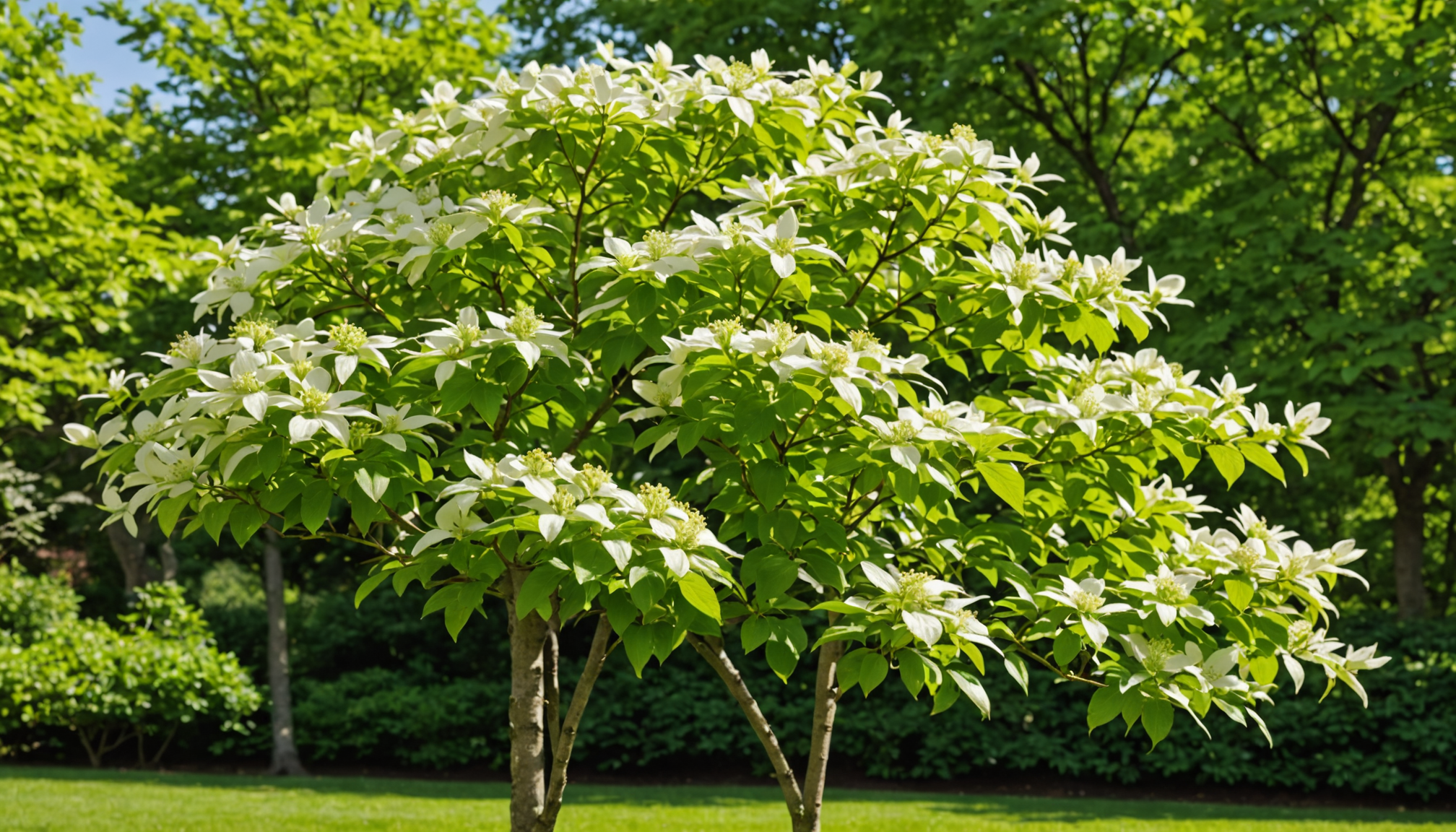 Now that you’ve selected the ideal tree species for your yard, it’s time to prepare your planting site. Properly preparing your yard is crucial to ensure that your new tree has the best possible start. Here’s a step-by-step guide to getting your yard ready for planting.
-
Site Evaluation:
- Reassess the location chosen for your tree, taking note of sunlight exposure, soil condition, drainage, and nearby structures or utilities.
- Ensure there’s ample space for the tree to grow both above and below ground, checking for power lines or underground pipes.
-
Clear the Planting Area:
- Remove any debris, rocks, weeds, or grass within a radius that corresponds to the size of the tree’s future canopy.
- This area should be free of competition for nutrients, allowing the young tree to establish itself more easily.
-
Conduct Soil Testing:
- If you haven’t done so already, conduct a soil test to determine pH levels and nutrient composition, allowing you to amend the soil as needed.
- Adjust the pH by adding lime to increase alkalinity or sulfur to increase acidity, depending on the tree’s needs.
- Incorporate organic matter, such as compost or well-rotted manure, to improve soil structure and fertility.
-
Enhance Drainage:
- If your site suffers from poor drainage, consider elevating the planting area by mounding the soil or creating a raised bed.
- Avoid planting in depressions where water naturally pools; instead, aim for a location with slight elevation.
-
Delimit the Planting Area:
- Mark the planting site with spray paint or stakes to define the tree’s future root zone.
- The circle should generally be twice as wide as the tree’s root ball to give roots ample room for expansion.
-
Prepare the Planting Hole:
- Dig a hole that’s the depth of the root ball and twice as wide. This encourages root establishment by making it easier for roots to spread.
- Loosen the soil at the bottom of the hole, allowing for easier root penetration and improved drainage.
With these steps, your yard will be well-prepared to receive your new tree. Remember, good preparation enhances the survival rate and growth rate of your tree, offering you a thriving landscape feature for years to come.
Proper planting techniques
Planting a tree properly is a fundamental step that establishes the framework for robust growth and a healthy future. The right technique can significantly enhance root establishment and overall tree vigor, minimizing stress and increasing the chance of survival.
Begin by removing the tree from its container or burlap wrapping with care, preserving as much of the root system as possible. For containerized trees, gently tease the roots apart to prevent them from continuing to grow in a circular fashion. This simple action can help prevent a common issue known as “girdling roots,” which can strangle the tree’s trunk and inhibit growth.
Once the roots are prepared, place the tree in the center of the hole, ensuring that the top of the root ball is level with or slightly above the surrounding soil. Pay close attention to planting depth—a common mistake is planting too deep, which can suffocate the roots and lead to poor growth. In contrast, planting at the correct depth allows for optimal root aeration, and places the root flare—the point where the roots spread at the trunk base—just above soil level for stability and health.
Backfill the hole using a mix of the native soil and any necessary amendments based on your soil test results. Avoid compressing the soil too much, as this can reduce necessary air space in the soil and hinder root expansion. Instead, use your hands to gently tamp down the soil and eliminate air pockets that might cause the roots to dry out.
Water the tree thoroughly after planting to initiate anything but superficial root growth into the surrounding soil. This first watering is crucial; it settles the soil around the roots and provides much-needed moisture immediately after planting. Follow-up waterings should be frequent but not excessive, nurturing the roots without causing waterlogging.
In the final step, consider adding a 2 to 4-inch layer of mulch around the base of the tree, while keeping it a few inches away from the trunk to prevent rot. Mulching helps retain moisture, reduce competition from weeds, and regulate soil temperature—key benefits that support healthy tree development.
By adhering to these proper planting techniques, you’re setting the stage for your tree to flourish, adding beauty and environmental benefits to your landscape for generations. As the tree matures, the investment in these foundational practices will be reflected in its robust health and enduring presence in your yard.
Watering and maintenance guidelines
Once your tree is securely planted, the next critical step towards ensuring its successful growth and vitality involves establishing a strong watering and maintenance routine. Young trees are particularly sensitive and require regular attention to foster deep root development and resilience against environmental stressors.
Initially, watering is one of the most crucial aspects of tree care. During the first growing season, you’ll need to monitor soil moisture carefully, watering your tree regularly to maintain consistent moisture levels. A general guideline is to water newly planted trees every 7 to 10 days, deeply soaking the soil. This encourages roots to extend deeper into the ground, making the tree more drought-resistant over time. Be mindful of overwatering, though, as overly saturated soil can lead to root rot by suffocating the roots. Employing a soil moisture meter can be particularly helpful in assessing whether the tree needs more water or if it’s time to let the ground dry out a bit.
As the tree establishes itself, develop a strategic watering schedule that extends into the following years but decreases in frequency, focusing on deep, less frequent waterings to promote robust root systems. The frequency of watering should adjust based on seasonal changes; for instance, your tree will likely need less water during rainy periods and more during dry, hot spells.
The application of mulch plays an essential role not only in water conservation but also in disease prevention and soil enrichment. Preserve the mulch layer around the tree base, replenishing it as needed to maintain a thickness of about 2 to 4 inches. Remember to keep the mulch a few inches away from the trunk to avoid trapping excess moisture against it, which can lead to rot. Mulch controls weeds and retains soil moisture, creating an ideal growth environment.
Regular inspections and maintenance also include monitoring for pests and diseases. Young trees are susceptible to various threats, such as insect infestations and fungal infections. Regular visual checks can help you spot early signs of trouble, such as discolored leaves, strange bark textures, or uncharacteristic growth patterns. Address any issues promptly, using appropriate treatments, whether natural or chemical, to protect the tree’s health. Consider consulting a professional arborist if you notice something unusual that you can’t diagnose independently.
Pruning is another component of ongoing tree maintenance. While newly planted trees may not require extensive pruning, it’s beneficial for removing dead or damaged branches and promoting healthy structural development. Ideally, prune trees during late winter or early spring when the tree is dormant and less stressed by the removal of branches. Use sharp, clean tools to make precise cuts that will heal quickly, preventing disease entry points.
As your tree transitions from a new addition to your landscape into a mature fixture, these watering and maintenance habits will become second nature. They lay the groundwork for a thriving tree that not only beautifies your yard but also contributes to your local ecosystem. Staying vigilant and responsive to your tree’s needs will ensure it can grow strong and resilient, rewarding your efforts for many years to come.
Protecting young trees from pests and weather
Ensuring the protection of young trees from pests and adverse weather conditions is pivotal for their development and longevity. When it comes to shielding your saplings from pests, incorporating physical barriers can be highly effective. Surround the base of the tree with protective mesh or tube guards to deter rodents and insects. These barriers prevent gnawing and minimize the risk of damage during the tree’s vulnerable young stage. Additionally, consider organic pest control methods, such as insecticidal soaps or neem oil, to manage pest populations without harming the tree or surrounding plants.
Weather protection is equally important, especially during the initial years when trees are still acclimating to their environment. For instance, newly planted trees might need staking to maintain stability against strong winds, which can uproot or break delicate stems. Use soft ties to loosely attach the tree to stakes, allowing for some movement that encourages strong trunk development. Be sure to remove the stakes once the tree has established stability to prevent them from restricting growth.
In regions prone to frosty conditions, safeguarding trees from winter injury is crucial. Apply a layer of organic mulch around the tree’s base in late fall to insulate the roots from temperature fluctuations. Avoid piling the mulch directly against the trunk to prevent rot. For more severe protective measures, consider wrapping the trunk with burlap or tree guards to shield against sunscald and frost cracks, which occur when the bark expands and contracts in response to fluctuating temperatures.
During hot summer months, young trees are susceptible to heat stress. To prevent dehydration and sunburn, maintain a consistent watering schedule and monitor soil moisture levels. Offering afternoon shade to especially vulnerable species can reduce heat exposure, protecting the young bark and leaves from scorching.
Vigilant monitoring is key in identifying early signs of stress or damage from pests and weather. Observing your trees carefully allows for timely intervention, whether that means adjusting pest control tactics or enhancing weather protection strategies. By combining proactive measures with attentive care, you nurture an environment where young trees can thrive, slowly growing into strong, mature specimens that beautify and benefit your landscape.
In conclusion, planting and nurturing a tree involves careful consideration and dedication to various stages of its growth. By choosing the appropriate species, preparing the land meticulously, employing correct planting methods, ensuring proper watering and maintenance, and protecting young trees from pests and harsh weather, you complete the cycle of responsible tree care. A well-chosen and cared-for tree will reward you with its beauty, shade, and environmental contributions, transforming your outdoor space into a vibrant and sustainable haven.